Heritage Walk Explores Anglo-Indian and Parsi History in Royapuram
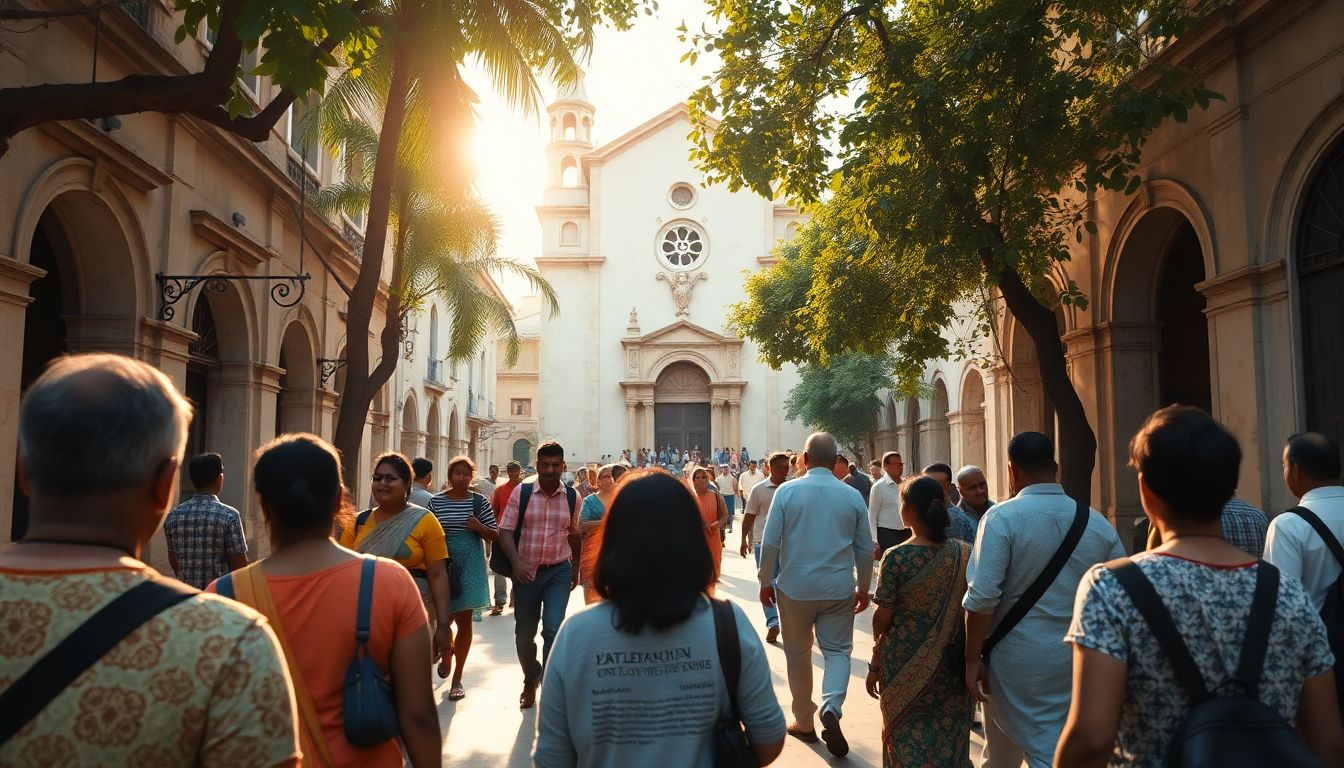
A heritage walk organized in Royapuram brought to light the rich history of the neighbourhood's Anglo-Indian and Parsi communities, tracing how the area evolved from the early 20th century to the present day. The walk was led by architect Muhilann M and S Prasanna as part of a collaboration between NinetyEight.Madras and Made of Chennai.
In the early 20th century, Royapuram was known for its distinct character, shaped by its proximity to the sea and a large Anglo-Indian population. Although the community's numbers have since dwindled, several historic landmarks continue to stand in the area, including the Mater Dolorosa Church, St Kevin’s Anglo Indian Higher Secondary School, and St Anne’s Girls’ Higher Secondary School.
The history of Anglo-Indians in the locality dates back to the construction of the Royapuram Railway station in 1856, which remains the oldest surviving railway station in India. When the Madras Railway Company was formed, many railway engineers and workers were Anglo-Indians. As the first railway line was planned from Royapuram to Walajah Road, many settled in the neighbourhood.
The walk also stopped at St Peter’s Church, a blue-and-white structure linked to events from the 1790s. When the Nawab of Arcot was denied residence inside Fort St George, he was allotted land in Chepauk. The resulting construction of Chepauk Palace led to the relocation of a local fishing community to Royapuram, where they later contributed to building St Peter’s Church. According to Muhilann, one account suggests Royapuram derived its name from the saint, known in Tamil as Rayaappan.
Participants also visited the Parsi Anjuman Baug, an Indo-Saracenic building constructed in 1900. Mahiar F Shroff, who manages the property, explained that the building serves as a guest house for the Parsi community. While Royapuram was once a stronghold for Parsis, around 75 Parsi families now live spread across Chennai.
Adjacent to the Anjuman Baug is a Parsi cemetery. Shroff noted that while traditional Parsi custom places the deceased in a Tower of Silence for vultures, the absence of vultures in modern times has led the community to cremate bodies instead.