Tamil Nadu Faces Steep Cut in Rural Employment Funds Under Proposed Central Formula
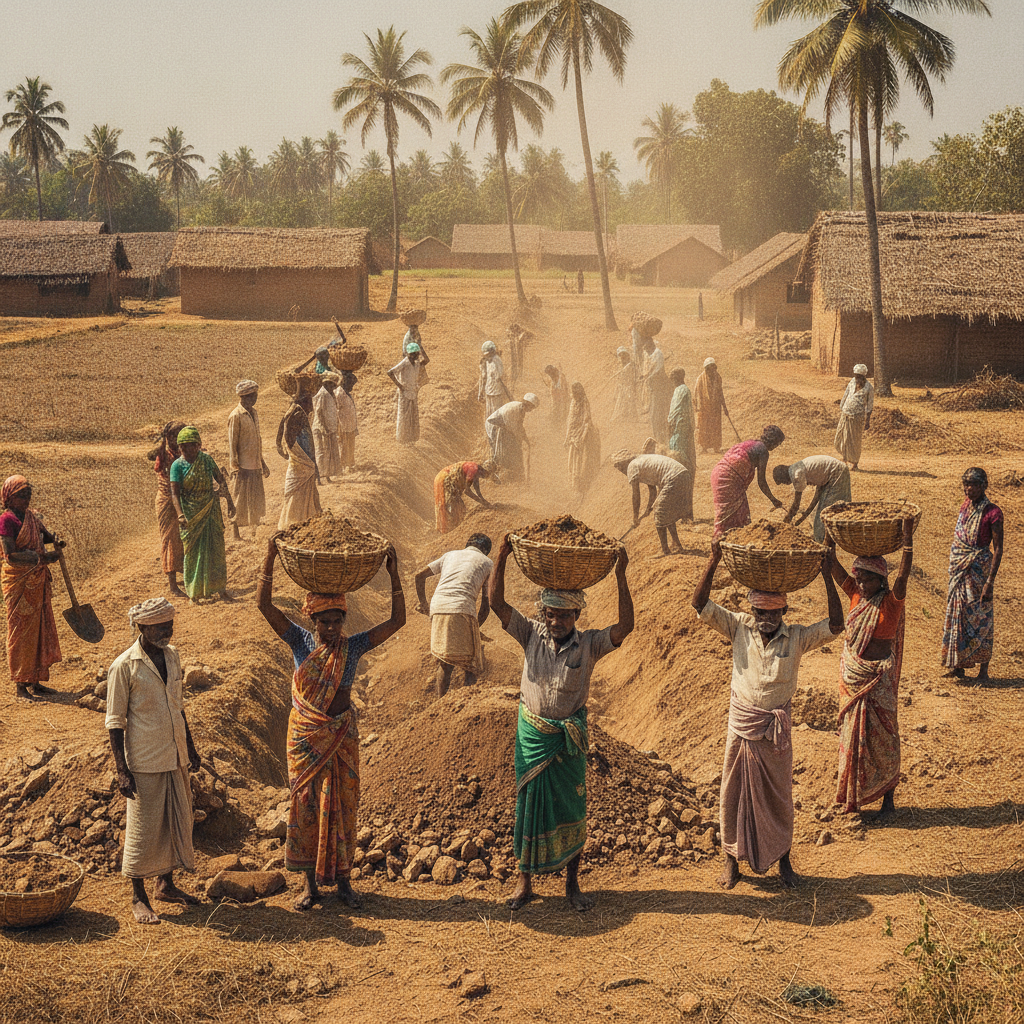
CHENNAI — State government officials in Chennai have raised concerns over a draft proposal by the Union rural development ministry that is likely to result in a steep cut in funding for the VB-G RAM G rural employment scheme in Tamil Nadu. Under the new formula, the state's projected share of national funding is expected to drop significantly, with rural parts of Tamil Nadu expected to bear the brunt of the reduction.
According to officials familiar with the draft proposal, Tamil Nadu's share of national funding under the employment guarantee scheme could fall to around 4.1%. Since 2014, the state has traditionally accounted for nearly 10% of the total allocations made by the Union government, receiving a total of Rs 87,639 crore.
Under the newly proposed allocation mechanism, Tamil Nadu is projected to receive only Rs 3,923 crore out of the total central allocation of Rs 95,692 crore for the 2026-27 fiscal year. This continues a downward trend for the state, which saw its allocation fall from Rs 12,698 crore in 2023-24 to Rs 10,156 crore in 2024-25, and further down to Rs 5,878 crore in 2025-26.
The funding cuts stem from the Union government's decision to replace the Mahatma Gandhi National Rural Employment Guarantee Scheme (MGNREGS) with the VB-G RAM G Act starting July 1. This transition shifts the programme from a demand-driven funding model to a normative allocation model based on recommendations from the 16th Finance Commission.
Under these draft rules, funds will be distributed based on parameters such as population data from the 2011 census, per capita Gross State Domestic Product (GSDP), and demographic performance.
State officials in Chennai argue that this shift undermines the core principle of the employment guarantee programme, which was designed to respond directly to the actual demand for work. Officials noted that the formula puts southern states at a disadvantage while benefiting populous northern states. Other southern states, including Andhra Pradesh, Telangana, and Kerala, are also expected to face funding cuts of 30% to 40%.
The Union government has invited suggestions and objections to the draft rules within 30 days of the notification, which was issued on May 22.