Tamil Nadu Announces Rooftop Solar Subsidy Scheme Offering Up to Rs 1 Lakh
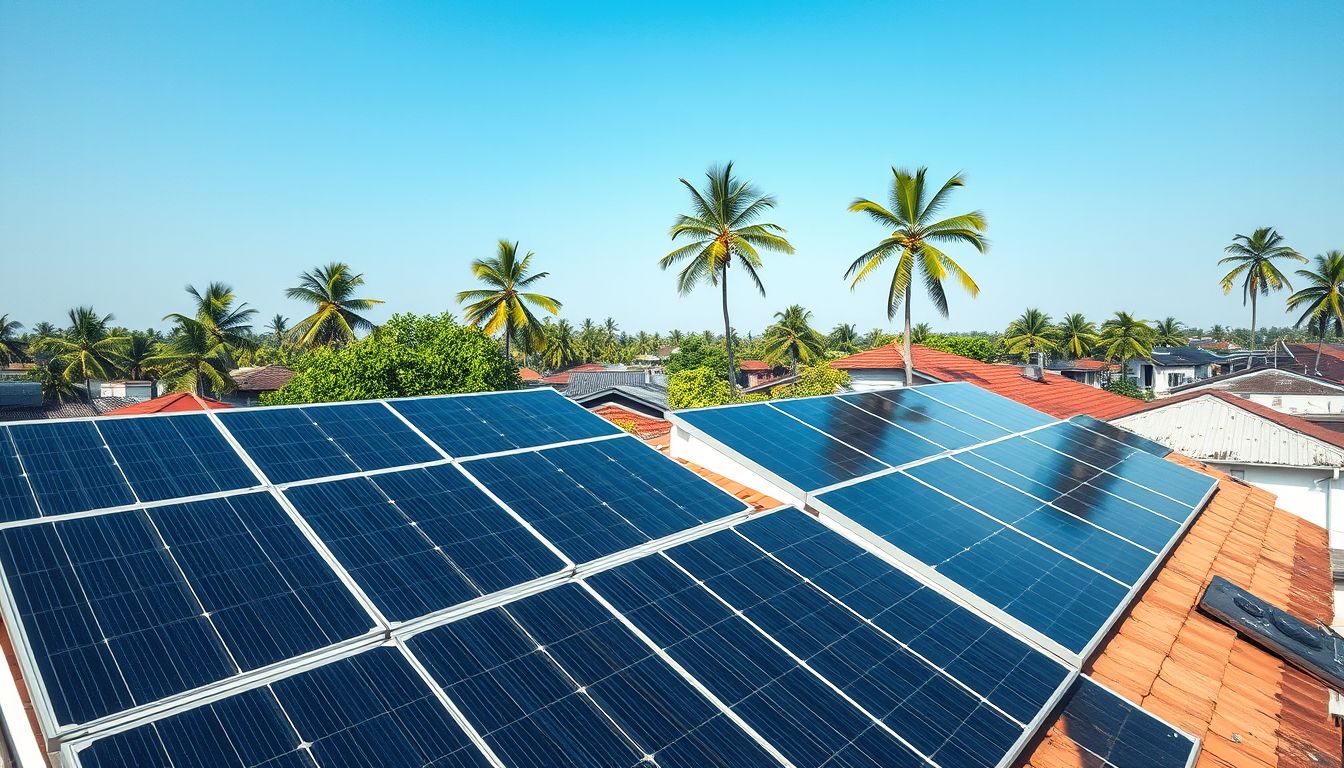
The Tamil Nadu government has announced a new 'Rooftop Solar Subsidy Scheme' in its budget proposals for the year 2026-27, offering domestic consumers a state subsidy of up to Rs. 1 lakh to install rooftop solar panels in Chennai and across the state.
The initiative will operate in convergence with the Union government's 'Pradhan Mantri Surya Ghar Muft Bijli Yojana' to lower the cost of solar panel installations for residential households, aiming to reduce electricity bills and encourage the adoption of renewable energy.
Till July this year, Tamil Nadu's total rooftop solar capacity stood at 316 MW across 87,039 installations covering 1,03,004 households, including apartments.
Under the dual-subsidy structure, residential consumers can receive up to Rs. 78,000 in Central assistance in addition to the state top-up subsidy of up to Rs. 1 lakh, depending on the system's generation capacity. For a 1kW system, the Central subsidy is Rs. 30,000, which increases to Rs. 60,000 for a 2kW system. The maximum Central assistance of Rs. 78,000 applies to systems of 3kW or higher, alongside the state government top-up.
Consumers using up to 150 units per month require a 1kW or 2kW system, while those using 300 units per month require a 2kW to 3kW capacity to secure the full Central subsidy. Systems exceeding 3kW are suited for households consuming more than 300 units monthly.
To avail of the scheme, domestic consumers must apply through the PM Surya Ghar National Portal, select Tamil Nadu, and choose either Tangedco or TNPDCL as their distribution company alongside their consumer electricity service number. After obtaining technical feasibility approval, consumers select an MNRE-empanelled installer and submit a work completion report on the Tangedco unified solar rooftop portal. Following inspection and net-meter commissioning, subsidy funds are disbursed directly into the consumer's bank account.
Subsidies apply exclusively to Indian-manufactured panels, as the Ministry of New and Renewable Energy requires a 16-digit digital Domestic Content Requirement (DCR) certificate confirming that modules and cells were produced domestically. Imported solar panels, which are also subject to a 40 per cent basic customs duty, do not qualify for the subsidies.