NITI Aayog Urges Focus on Semiconductor Design and Packaging Over Wafer Race
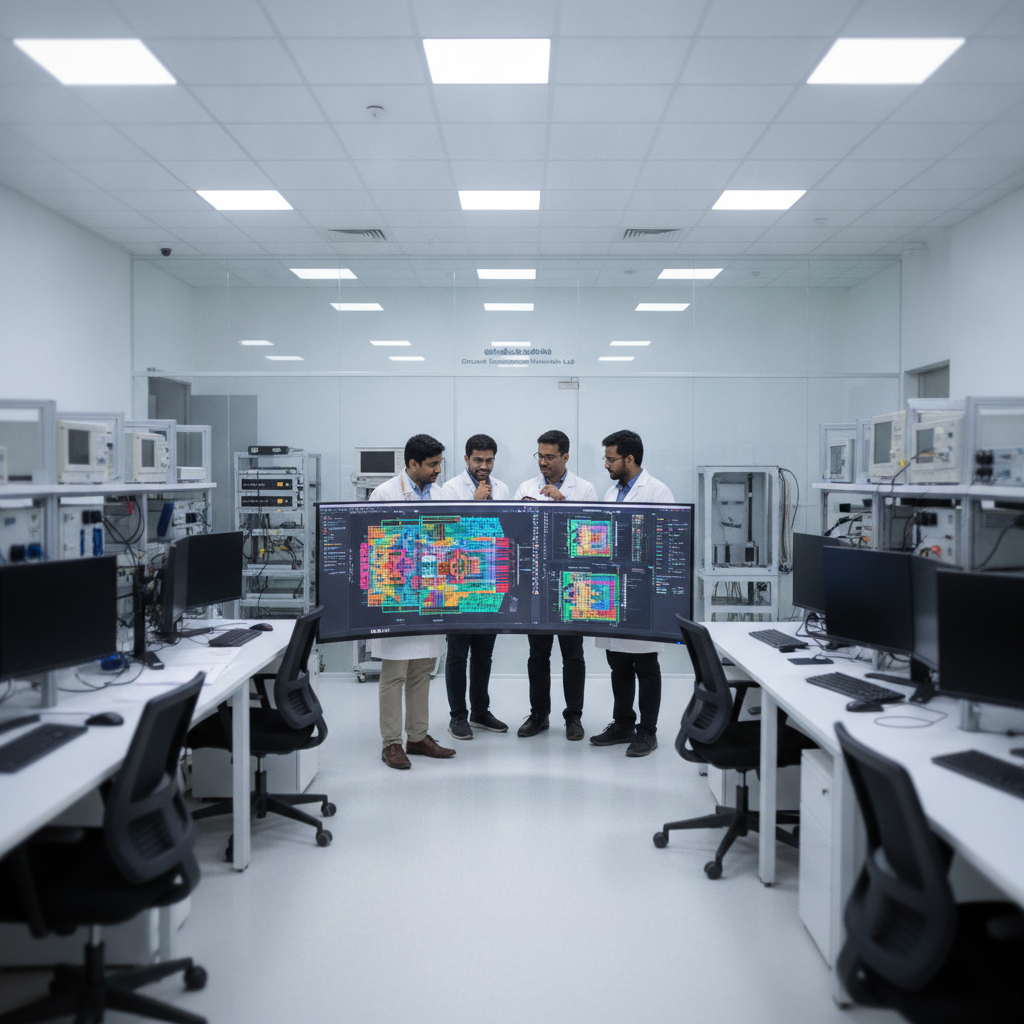
A report released by NITI Aayog on Friday has advised India to prioritise semiconductor design and packaging over the highly competitive wafer fabrication race, a strategic shift that carries significant implications for the technology and business sectors in T Nagar and the wider Chennai area. The report suggests the country should focus on its current strengths to aim for global leadership in design, outsourced semiconductor assembly and testing (OSAT), advanced packaging, and critical semiconductor materials.
This policy recommendation contrasts with the government's rhetoric and the stated goals of ISM 2.0, which was announced in February and featured a roadmap for advanced manufacturing of 3 and 2 nanometre technology nodes. Instead, NITI Aayog argued that capital allocation and talent should be prioritised based on strategic importance and integration into the global value chain.
According to the report, India should pivot away from trying to catch up in the foundry race. It recommended focusing on advanced packaging, system integration, and manufacturing scale, which it noted are as important as transistor nodes in the current era.
The report urged the country to be selective and pragmatic regarding advanced technology nodes. It highlighted that mature-node logic, speciality analogue, mixed-signal chips, and compound semiconductors like Silicon Carbide (SiC) and Gallium Nitride (GaN) are what matter most to India's economy, as they power the country's industrial and strategic sectors.
Industry experts shared varying perspectives on the recommendations. Raja Manickam, the founder of iVP Semi, agreed that India should target well-defined, high-value, mature foundational semiconductor products rather than cutting-edge ones. He noted that power semiconductors, simple logic, and catalogue chips are easier to design and manufacture, have strong existing demand, and require a lower capital expenditure of roughly $400 million to $500 million.
Manickam added that these foundational chips can generate large volumes, helping India learn manufacturing at scale and attracting a supporting ecosystem of equipment makers and chemical suppliers. He suggested treating advanced node goals as longer-term objectives.
However, Ashok Chandak, president of IESA and SEMI India, cautioned against creating an artificial distinction between mature nodes and advanced technologies. While agreeing that design, packaging, and mature-node segments can deliver near-term global relevance, Chandak stated that a successful semiconductor ecosystem requires both capabilities.