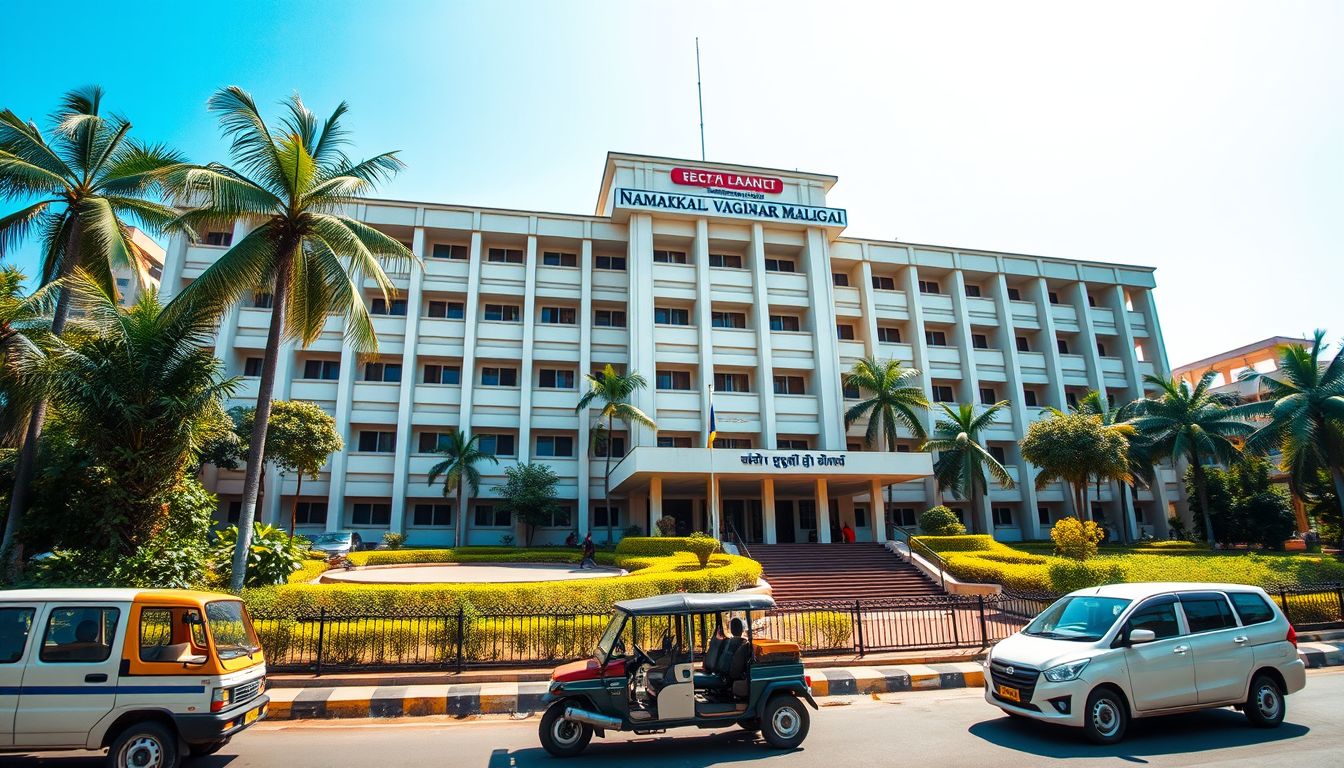
CM Joseph Vijay Shifting Office to Namakkal Kavignar Maaligai, Says PWD Minister

Tamil Nadu Public Works Department Minister Aadhav Arjuna announced in the Assembly on Tuesday that Chief Minister C. Joseph Vijay is shifting his office to the Namakkal Kavignar Maaligai. The relocation is intended to accommodate visiting foreign dignitaries, his secretarial staff, and over 200 officials working to restructure state administration and establish a new policy vision.
The announcement came in response to remarks from DMK MLA and former Minister E.V. Velu, who cited media reports alleging that modification work on the Chief Minister’s office had commenced prior to the completion of the tender process. Mr. Velu also noted that while the building was constructed during the tenure of late leader M. Karunanidhi, moving the office there might cause inconvenience to other government employees.
Dismissing the reports regarding tender irregularities, Mr. Arjuna stated that the shift is a temporary arrangement aimed at improving working conditions rather than personal comfort. He noted that approximately 80 officials currently work with the Chief Minister in constrained quarters that lack adequate basic amenities, including proper toilet facilities.
Mr. Arjuna pointed out that four key secretaries to the Chief Minister currently operate out of a cabin under 100 square feet, which creates significant space constraints when hosting delegations from foreign missions, including the U.S. Consulate and other embassies. He drew parallels to past decisions by former Chief Ministers M. Karunanidhi and J. Jayalalithaa to construct new Secretariat facilities due to long-standing infrastructure limitations in visitors' rooms.
Addressing wider departmental matters, the Minister alleged that corruption had affected the PWD and Highways Department over the past five years and stated that the government would soon present a White Paper on tenders issued during that period.
Mr. Arjuna explained that the government maintained the previous year's Schedule of Rates rather than introducing new ones because re-tenders conducted for 20 projects had successfully lowered costs by 20% to 36%. He added that the resulting savings were redirected to the State Treasury, noting that revising the schedule would have increased civil rates by 3% to 5%.