Chennai Corporation to Revamp Underused T Nagar Multilevel Parking Facility
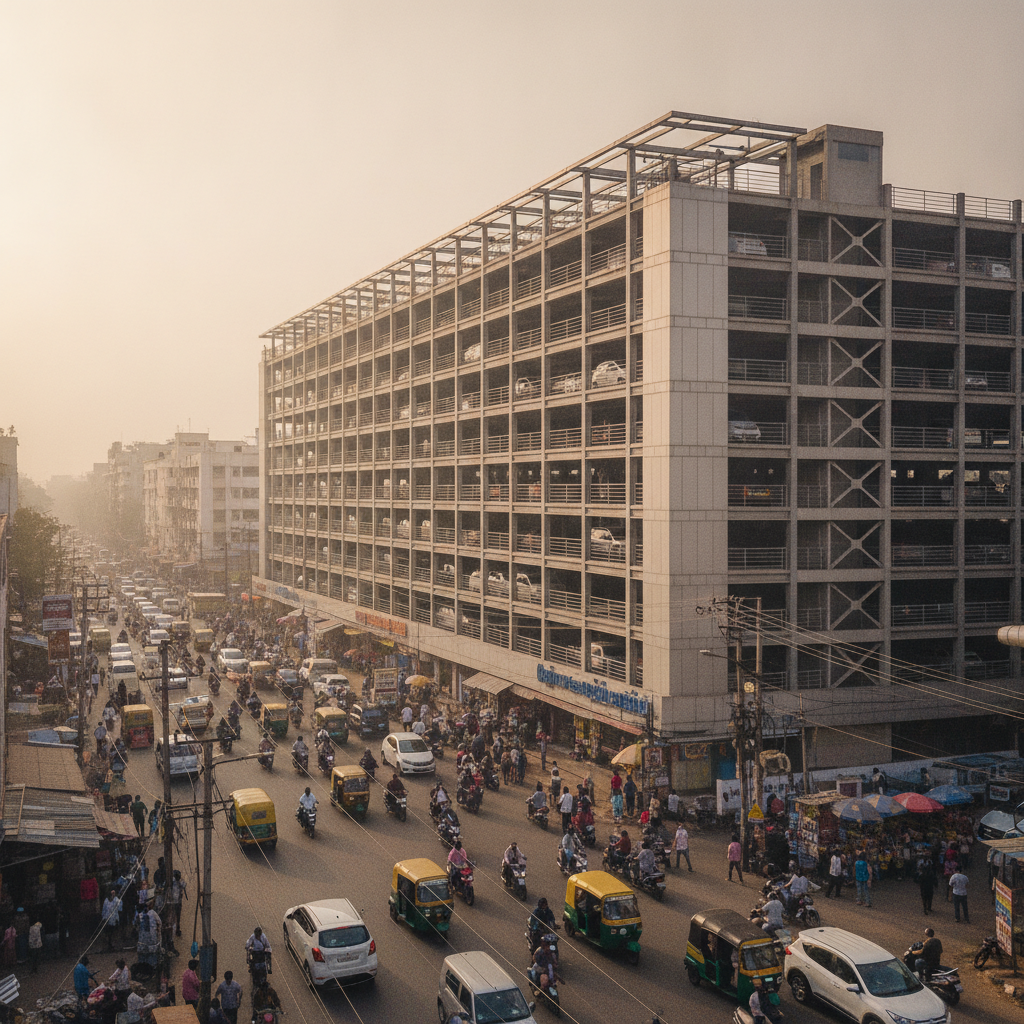
The Greater Chennai Corporation has floated a tender to revamp the underused multilevel parking facility in T Nagar to resolve years of poor maintenance and improve local traffic management. GCC Commissioner Dr. G. S. Sameeran confirmed the plan on June 1, 2026, following a personal inspection of the site on Sunday.
Inaugurated in 2021, the automated parking structure has faced severe criticism for being underutilised as some of its floors became defunct. The facility has also failed to provide a long-term solution to the heavy on-street parking that congests the busy T Nagar area.
The upcoming maintenance work aims to bring all designated floors back into service. The restoration process will include replacing ropes and carrying out engine work across the structure. Additionally, the civic body plans to introduce revised parking charges once the facility is fully operational.
Although designed to accommodate 222 cars and 513 two-wheelers, only a fraction of the facility is currently in use. Under the new layout, the six upper floors of the building will be designated specifically for cars. Two-wheelers will be directed to park in the two basement levels and on the seventh floor.
In addition to the T Nagar site, the corporation is planning further infrastructure developments. Commissioner Sameeran stated that two new multilevel parking facilities are coming up in Tiruvottiyur and Kodambakkam under a public-private partnership model. An official noted that these sites will generate revenue for the civic body, with the Tiruvottiyur facility housing a theatre and the Kodambakkam facility featuring a shopping complex.
However, urban transport experts suggest that physical structures alone are not enough. Shivani B, a senior associate at the Institute for Transportation and Development Policy India, explained that the success of these facilities depends on strict on-street parking management in the surrounding areas.
According to Shivani B, these structures require strong enforcement against parking in no-parking zones, alongside improved last-mile connectivity, to effectively reduce road encroachments, improve traffic flow, and create more space for pedestrians.