TVK's V S Babu Defeats Chief Minister M K Stalin in Kolathur Constituency Election
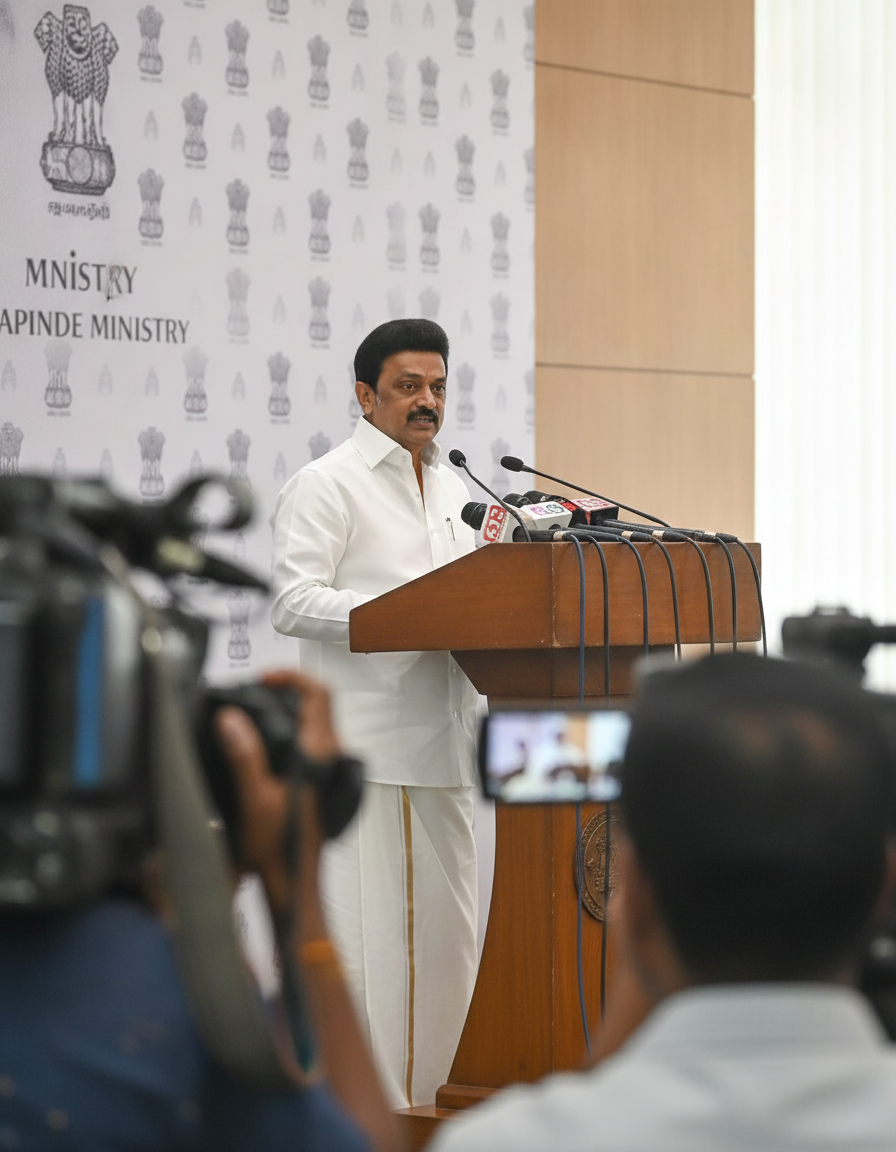
In a major political shift on Monday, Tamil Nadu Chief Minister and Dravida Munnetra Kazhagam (DMK) leader M K Stalin lost his legislative election in the Kolathur constituency to Tamilaga Vettri Kazhagam (TVK) candidate V S Babu. The defeat came as part of a wider legislative election loss for the ruling DMK, marking a significant transition in the state's political landscape.
V S Babu defeated the sitting Chief Minister by nearly 9,000 votes in Kolathur, a seat Stalin had held since 2011 and previously won by a large margin in 2021. The loss represents a rare defeat for a sitting Tamil Nadu Chief Minister in their own constituency.
Alongside Stalin, several senior DMK ministers lost their seats in the election. Among those defeated were Durai Murugan, P Geetha Jeevan, Ma Subramanian, TM Anbarasan, Nazar, Mathiventhan, and T R B Raja.
Following the announcement of the results, Stalin accepted the electorate's decision in a statement posted on X. He congratulated the victors and thanked the voters who supported the DMK-led secular progressive alliance. Stalin defended his administration's record, pointing to various welfare schemes and projects launched over the past five years. He stated that the DMK, which previously functioned as the ruling party, would now serve as an exemplary opposition party.
The election campaign was heavily influenced by issues of corruption and anti-incumbency. The TVK, led by Vijay, focused its campaign on allegations of corruption, specifically targeting former excise minister V Senthil Balaji. Vijay's campaign highlighted a "Rs 10" slogan linked to alleged overcharging at TASMAC liquor outlets, which became a central talking point against the DMK administration.
Despite Stalin's decades-long rise within the DMK and his disciplined path to leadership, the election outcome demonstrated a swift rejection of inherited authority and family-led politics by the voters.