Trial Near Vivekananda House Shows Chennai Bus Stops Need 250-300 mm Platforms
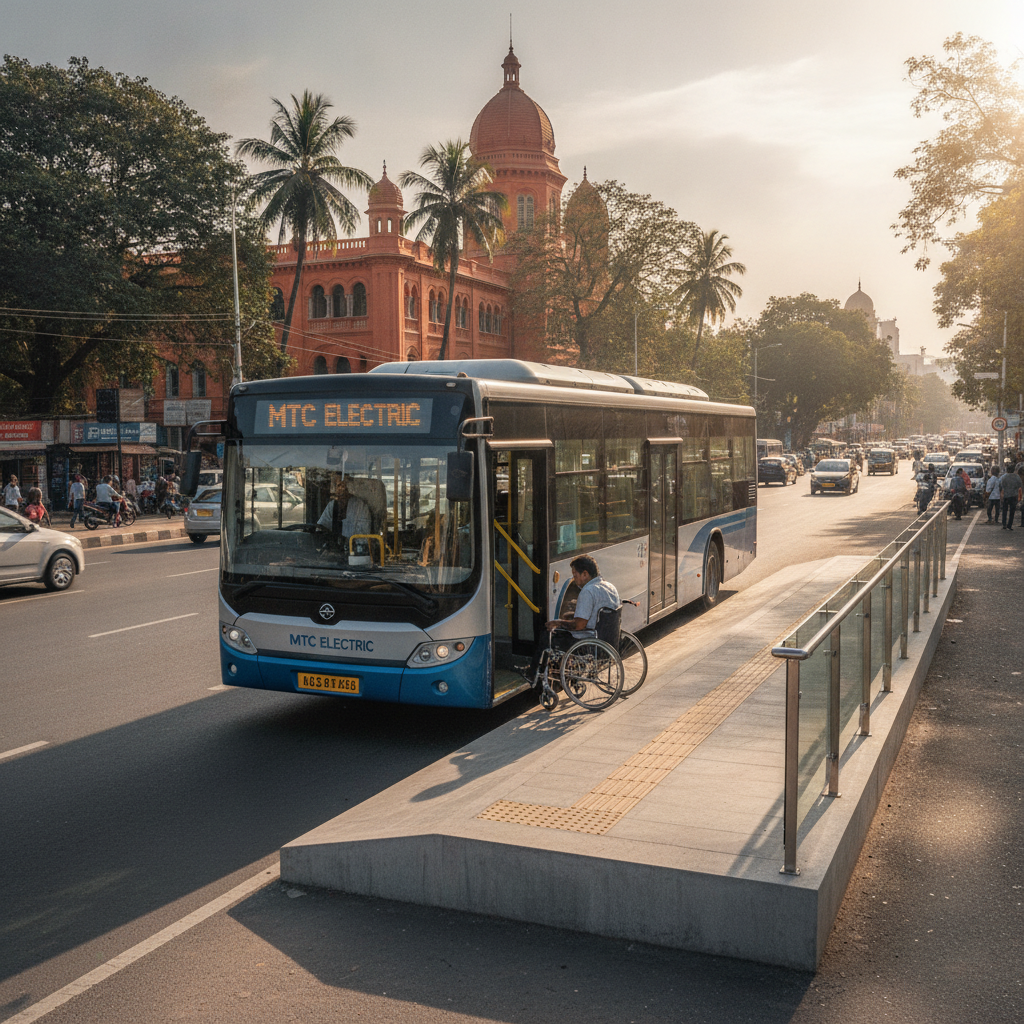
On Sunday, the Disability Rights Alliance (DRA) conducted a trial of near-level bus boarding for wheelchair users and persons with reduced mobility at bus stops near and opposite Vivekananda House in Chennai. The trial demonstrated that bus stop platforms need to be raised to 250–300 mm to enable safe boarding for passengers with disabilities.
The test was carried out using a Metropolitan Transport Corporation (MTC) electric bus at two locations featuring different platform heights. At the 300 mm high platform near Vivekananda House, participants using battery-operated wheelchairs were able to board with ease. However, at the bus stop opposite Vivekananda House, where the platform height was around 150 mm, several participants found boarding difficult and deemed the height impractical.
The trial also highlighted hazards related to vehicle positioning and ramp design. The electric bus was stationed approximately 1.5 feet away from the platform, creating a substantial gap. Wheelchair user Gnana Bharathi explained that a gap of this size creates a risk of wheels slipping under the boarding ramp, which could cause a fall. Disability rights lawyer and activist Ummul Khair noted that additional side supports are required on boarding ramps to assist individuals with perception issues.
Officials from MTC, the Chennai Unified Metropolitan Transport Authority (CUMTA), and the Greater Chennai Corporation's (GCC) Bus Route Roads department attended the trial and agreed to resolve the concerns. A GCC official stated that although Indian Road Congress guidelines prescribe a platform height of 150 mm, the city can implement 300 mm platforms to make buses accessible.
Addressing additional structural needs, DRA architect P. Sneha Catherine stated that Chennai's bus stop platforms must also be lengthened. She observed that many existing stops only fit a single bus, forcing a second bus to stop behind or parallel to it, which creates severe boarding obstacles for persons with disabilities.