TN Assembly Passes Unanimous Resolution to Make Tamil Madras High Court's Main Language
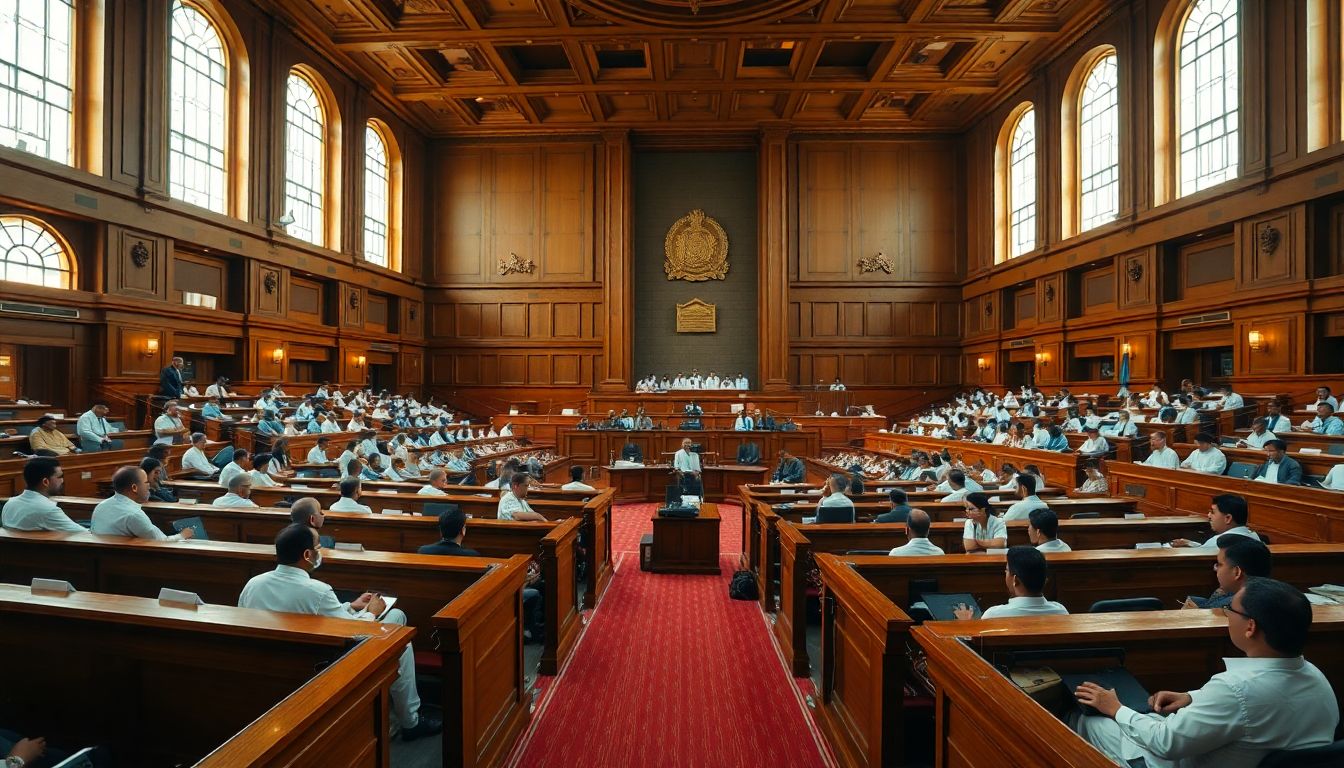
The Tamil Nadu Legislative Assembly has unanimously adopted a resolution, moved by Chief Minister C. Joseph Vijay, urging the Central government to recognise Tamil as the principal language of the Madras High Court. The resolution renews the state's longstanding demand to permit court proceedings in Madras to be conducted in the regional language.
The push to establish Tamil as an official and principal language of the Madras High Court has previously been pursued across party lines by both DMK and AIADMK administrations. During the tenure of former Chief Minister J. Jayalalithaa, the state government had proposed renaming the Madras High Court as the High Court of Tamil Nadu.
Former Chief Minister M.K. Stalin had also addressed the issue by writing directly to Prime Minister Narendra Modi and the Chief Justice of India. In those communications, he urged the judiciary to permit Tamil in courtrooms so that the public could comprehend proceedings.
Across the country, only four states—Bihar, Madhya Pradesh, Rajasthan, and Uttar Pradesh—currently use a language other than English in their high court proceedings, and in all four instances, that language is Hindi. To date, no high court in India has been granted permission to conduct official proceedings in a non-Hindi regional language.
Tamil Nadu highlighted that technological developments, including artificial intelligence, legal databases, and e-courts, now enable real-time translation. The state noted that these tools remove older operational hurdles, such as concerns that judges hailing from non-Tamil-speaking states would be unable to follow proceedings.
Lower and subordinate courts in the state already operate in the regional language, allowing citizens to speak and submit legal documentation in their native tongue. The initiative also points to broader judicial reforms that emphasize dignity and equality, including moving away from archaic colonial forms of address such as "My Lord" and "Your Lordship."