Chennai Startups Collect Real-World Video Data To Train Robotics And AI Systems
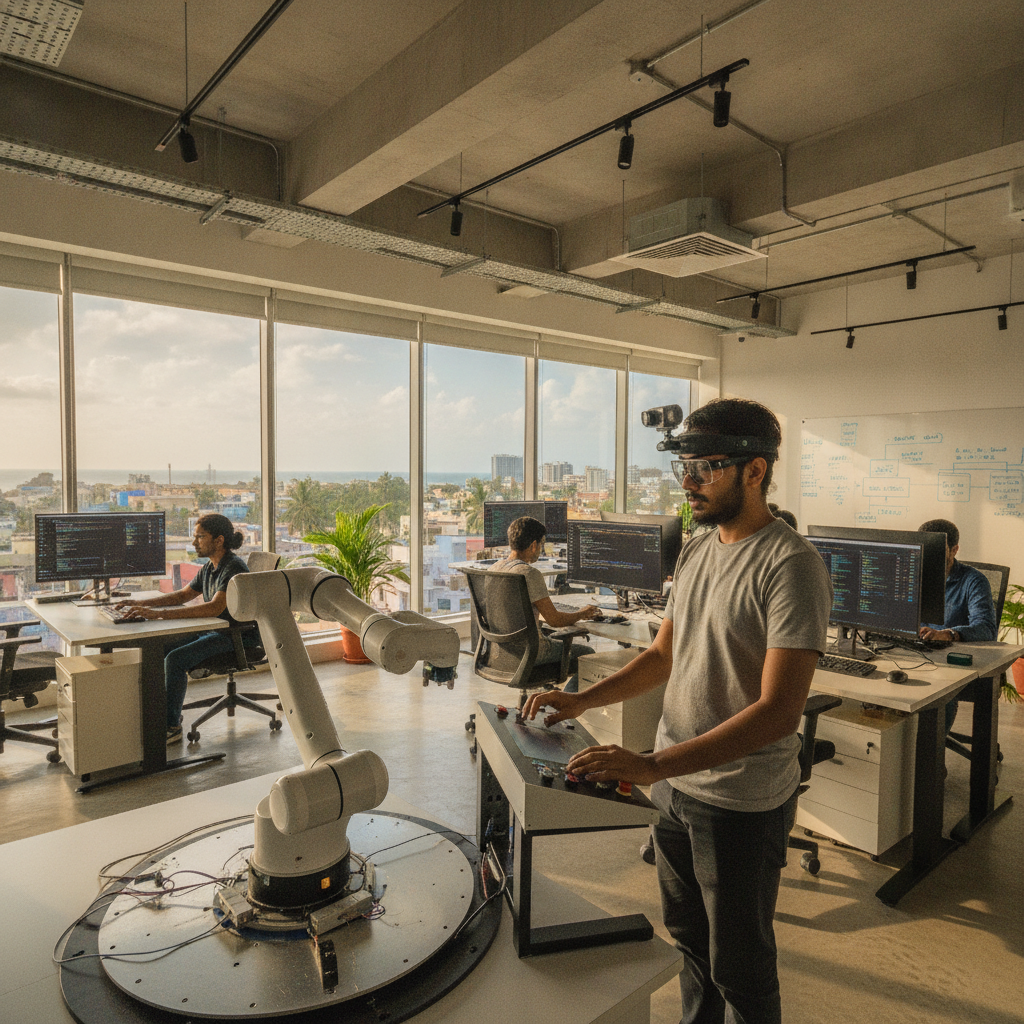
CHENNAI — Chennai startups are racing to capture real-world video data to fuel the growing global robotics industry, highlighted by home services startup Pronto’s admission last week that it piloted in-home video recordings to train physical AI systems.
The practice is part of a rapidly expanding sector involving AI data capture and labelling for the robotics supply chain. Startups such as Human Archive, Humyn Labs, Egolab AI, and Neocambrian are actively collecting "egocentric data," which consists of first-person video captured through wearables or head-mounted cameras.
To gather this data, these startups partner with local businesses, including cloud kitchens, hotels, home services platforms, small textile and garment factories, and warehouse operators. Data collectors record everyday physical tasks such as cooking meals, washing dishes, stitching garments, assembling components, and sorting inventory.
In some instances, startups have constructed dedicated "data factories" equipped with motion-tracking rigs to capture precise physical movements.
Abhinav Kukreja, founder of Neocambrian AI—a startup that raised funds from angel investors including the Dalmia Family Office Trust—explained that there is no equivalent repository of physical behavior on the internet. He noted that robots need to learn how to navigate messy homes, crowded factories, small shops, and repair stations, which environments in India can provide.
The captured data is used to train world models and physical AI systems, helping robots navigate unstructured environments and enabling smart glasses to recognize objects. Industry insiders also report significant demand for this data from the defense industry, particularly for training autonomous drone applications.
Manish Agarwal, co-founder of Humyn Labs, which works with leading frontier labs, stated that demand is growing from robotics original equipment manufacturers (OEMs), software developers, and enterprises. Humyn Labs converts the recorded data into episodic strings for robot memory to build physical action, voice, sight, and mobility capabilities. Agarwal added that they use verified networks of workers across 16 countries to train robots for various international environments.
However, the practice has raised serious questions regarding privacy, legality, and compensation, as some videos have reportedly been recorded without the consent of or payment to the workers. Following recent backlash, some factories have paused their pilot programs.