Chennai Astro-Photographers Share Moon-Chasing Journeys On International Moon Day
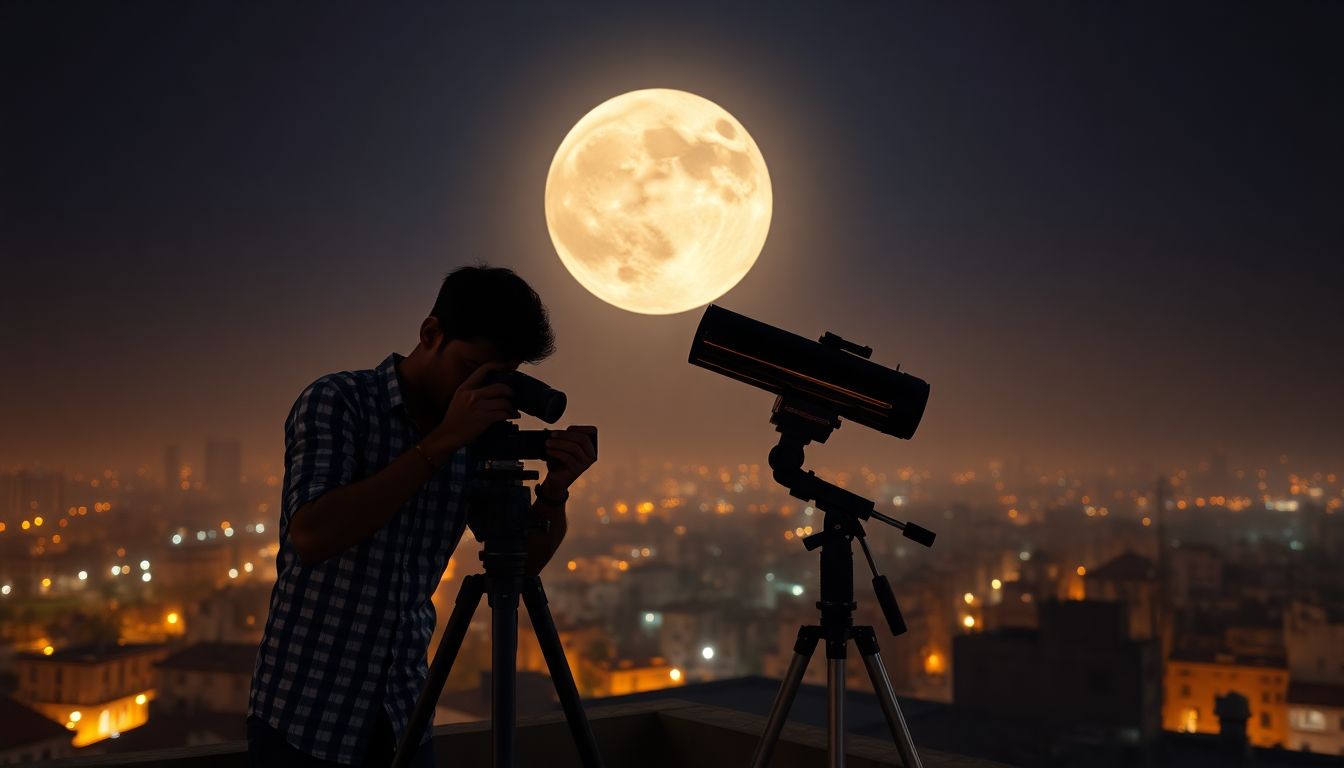
On International Moon Day, astro-photographers in Chennai shared their personal journeys of observing the moon and offered practical tips on how to capture celestial bodies despite the city's heavy light pollution. Local enthusiasts highlighted how early curiosity and accessible technology, ranging from homemade telescopes to smartphones, have driven their passion for astrophotography.
For Chennai-based photographer L Sai Srinivas, the journey began in May 2020 when he captured his first proper Milky Way shot from his terrace using a DSLR camera. He noted that while Chennai suffers from significant light pollution, beginners do not need expensive gear to start. According to Sai, aspiring photographers can begin with a smartphone, a tripod, and a Bluetooth shutter by experimenting with settings in Pro or Expert mode before upgrading to a DSLR camera with a prime lens.
Software engineer Rohith KA also started chasing the moon at a young age, calling it the most accessible celestial body. While he grew up hearing stories of a rabbit on the moon, looking through a telescope revealed craters and shadows that inspired him to zoom in on deeper sky mysteries like comets, nebulae, and the Milky Way.
Similarly, astro-photographer and trainer Sarath Prabhav recalled starting in Class 12 by fashioning a homemade telescope out of two PVC pipes and market-bought lenses. He initially used borrowed mobile phones to take grainy photos of the moon's craters and hills through the pipes, later deepening his interest at stargazing sessions in the Thiruvananthapuram Planetarium.
The photographers also highlighted the technical challenges of the hobby. Astro-landscape photographer Navaneeth Unnikrishnan explained that the moon's intense brightness against a dark sky creates a difficult dynamic range to capture, while atmospheric turbulence and the Earth's rotation can easily blur fine crater textures.
To overcome the Earth's rotation, Sai advised using the "300 Rule" to calculate shutter speed, taking thousands of short exposure frames, and later stacking and processing them to create a clear final image.