BOBP-IGO Report Warns of Climate Risks Facing Small-Scale Fishers
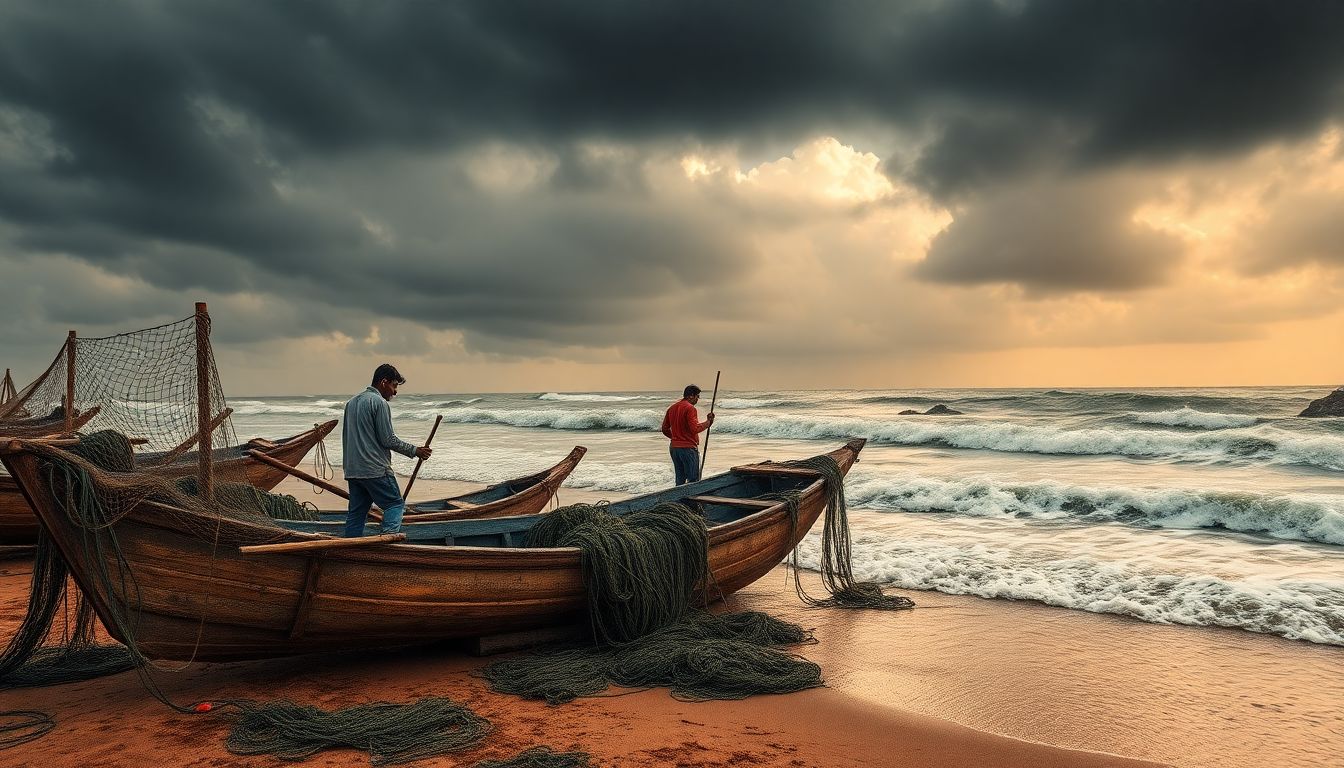
India’s small-scale fishing communities are facing increasingly unpredictable climate risks, including rising temperatures, stronger storms, shifting monsoon patterns, and changes in fish availability, according to a diagnostic report released in Chennai.
The assessment was prepared as part of the proposed National Plan of Action for Small-Scale Fisheries (NPOA-SSF). It was developed by the Bay of Bengal Programme Inter-Governmental Organisation (BOBP-IGO) alongside national experts, with technical guidance provided by the Food and Agriculture Organization of the United Nations.
Fishing communities surveyed for the assessment reported rising temperatures, unpredictable monsoons, frequent cyclones, and stronger storm surges. They also cited shifts in fish species and declining sardine catches, alongside an increasing number of rough-sea days that have directly led to lost fishing days and diminished livelihoods.
Beyond weather and environmental risks, the report drew attention to structural challenges in the sector. These include poor market access, inadequate storage and processing facilities, safety concerns at sea, and the limited participation of fishers and women in governance and decision-making processes.
To address these challenges, the assessment called for disaster mitigation and climate adaptation measures. Key recommendations include building stronger boats, improving weather forecasts, upgrading disaster-related infrastructure, providing timely compensation, and offering skill development and alternative livelihood opportunities.
“Climate impacts vary depending on the type of fishing unit, access to infrastructure, financial capacity and the ability to recover after a disaster,” said Dr. P. Krishnan, director of BOBP-IGO.
With the initiation phase of the NPOA-SSF process now completed, India has formally entered the development phase. The draft National Plan of Action is scheduled to be ready by November 21 this year.