BMW Chennai Plant in Mahindra World City Expands Capacity to 17500 Vehicles Annually
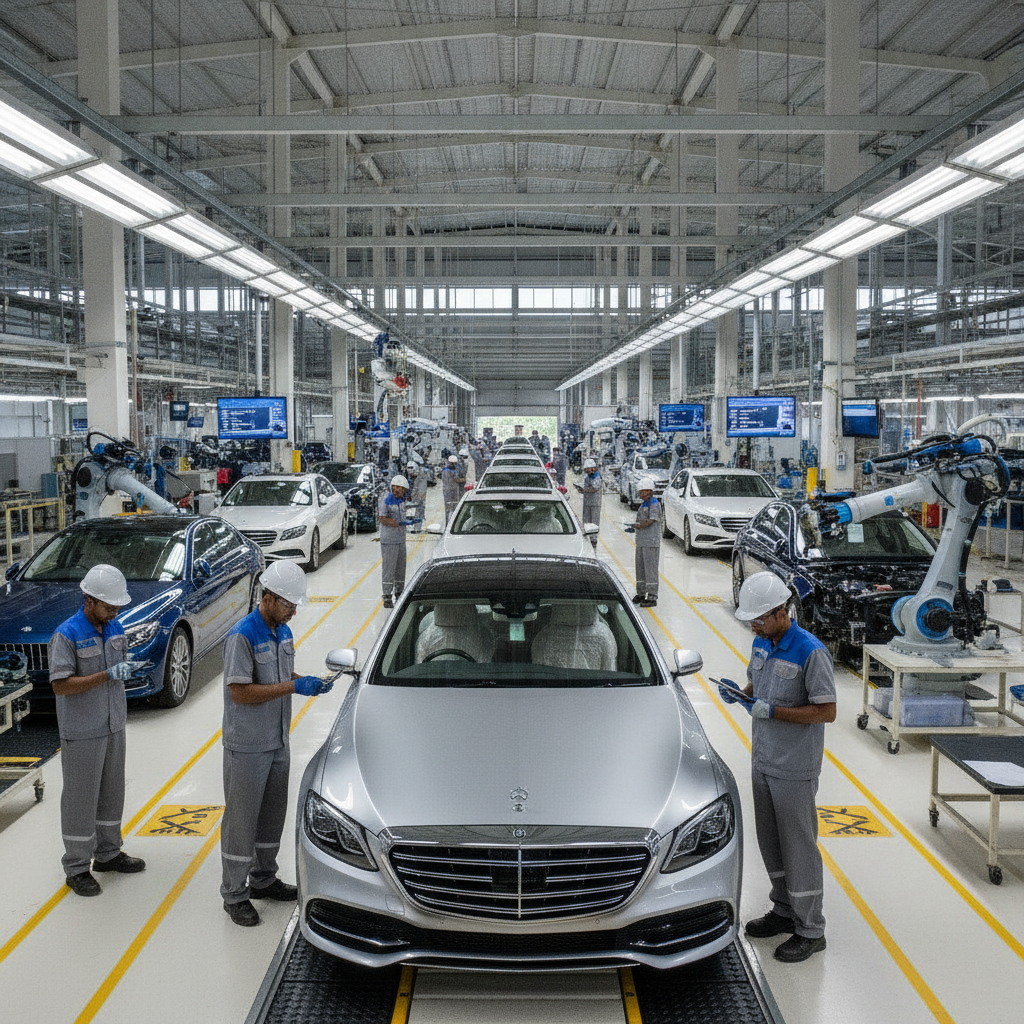
BMW’s manufacturing facility in Mahindra World City, Chennai, has expanded its production capacity to 17,500 vehicles annually, transforming the site into a major hub for the company's luxury car operations in India. The plant, which began as a small assembly operation in 2007, now produces 11 models under the BMW and MINI brands and has reached approximately 50% local sourcing for its vehicles.
When BMW first inaugurated the 20-million euro factory in 2007, India’s luxury-car industry was small, with annual sales of only about 4,500 vehicles nationwide. High import duties and limited prospects for local sourcing presented initial challenges. However, Norbert Reithofer, the chairman of BMW AG at the time, predicted that luxury-car demand would double as the country's broader automobile market grew.
Nearly two decades later, the assembly operation has scaled up significantly from its initial capacity of 2,000 vehicles per year. The facility now assembles a wide range of vehicles, including entry-level luxury sedans, large SUVs, and electric vehicles.
The Mahindra World City plant operates using a flexible semi knocked down (SKD) production model. Under this system, kits containing all required parts are shipped from BMW’s global packaging plants and assembled in Chennai. Thomas Dose, the Managing Director of BMW Group Plant Chennai, stated that this flexible setup has enabled the facility to introduce multiple models over the years while maintaining global quality standards.
A key driver of the plant's growth has been the increase in local sourcing. Following changes to import-duty regulations in 2014, BMW began incorporating more domestic content. Today, about 50% of the value of the locally assembled vehicles is sourced from India.
Localised components now include seats, HVAC systems, axles, exhaust systems, tyres, and engines. BMW works with approximately a dozen key suppliers to source these parts. According to Dose, further local sourcing is not limited by supplier capability but requires higher production volumes to justify additional investments.