Velachery West Residents Petition for MRTS Access Road and Flood Relief
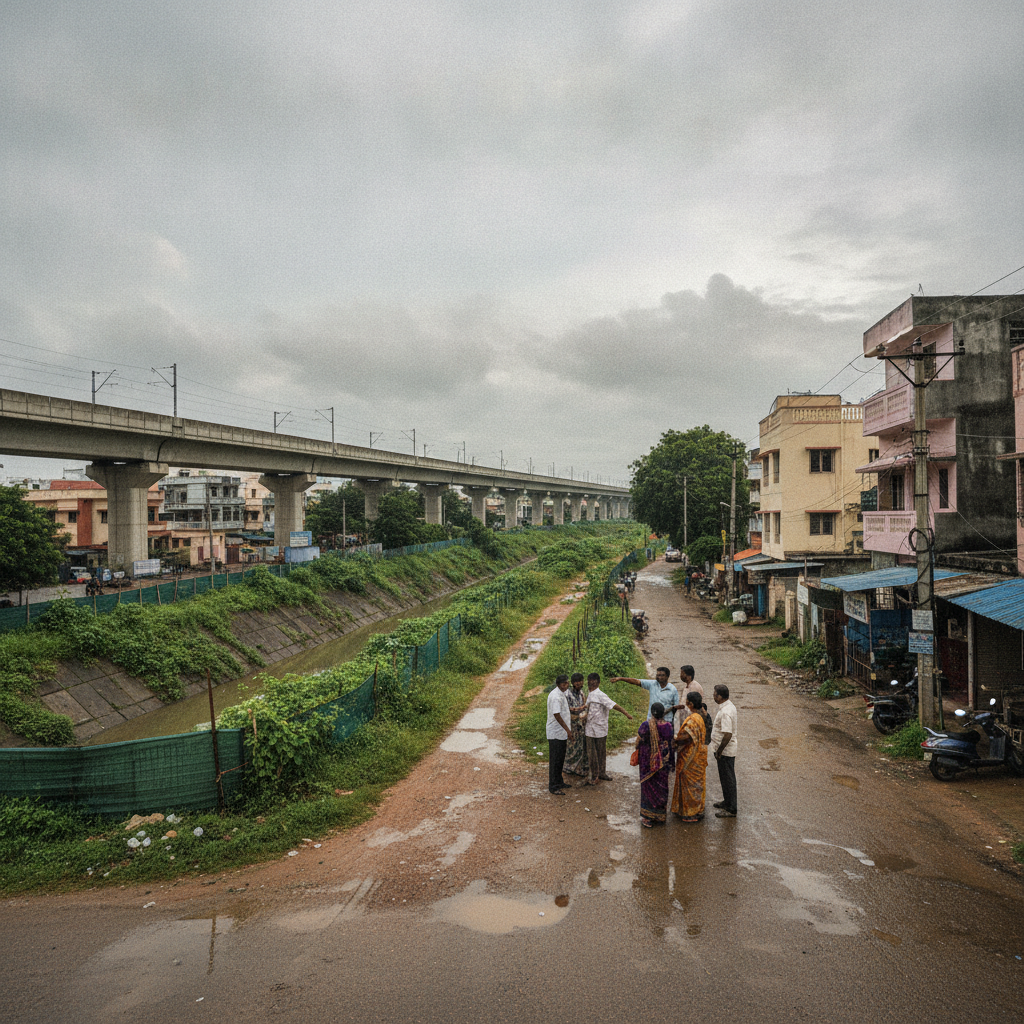
On June 19, 2026, residents and welfare associations in Velachery submitted petitions to civic bodies demanding the development of a direct access road to the MRTS Inner Ring Road and immediate action to mitigate severe seasonal flooding in the area.
The representation, filed by the Residents Welfare Associations of AGS Colony and Saraswathy Nagar, highlighted the long-standing commute challenges faced by the local population. Residents are seeking a direct road link to the MRTS Inner Ring Road service lane, which would connect through Saraswathy Nagar 8th Street and cross over the Veerangal Odai.
Currently, the neighborhood has a population of over one lakh residents. Despite its size, the locality still lacks direct access to this key transit corridor, leaving residents dependent on indirect and circuitous routes for their daily travel.
Following the submission of the petition, representatives from the local RWAs and officials from the civic corporation carried out a joint inspection of the area to evaluate the feasibility and alignment of the proposed road.
As an initial measure, a temporary road has been formed across the Veerangal Odai. Corporation officials have indicated that formal work on a permanent bridge at the site will be taken up once the proposed alignment officially comes under civic control.
Alongside the road connectivity issues, the petition also flagged the severe and recurring flooding that plagues Velachery West AGS Colony during the northeast monsoon. The neighborhood falls under Ward 176 in Zone 13 of the civic administration.
During heavy monsoon rains, floodwater routinely enters the ground floor of houses in the colony. This water remains stagnant for several days, with water levels reaching up to six to seven feet in some of the worst-affected locations.
According to the residents, the flooding is exacerbated because the Velachery West area receives heavy water runoff from more than 35 surrounding neighborhoods. The existing infrastructure, which features a four-foot storm water drain, is considered highly inadequate to handle such a large volume of flow, resulting in severe waterlogging.