Velachery Homeless Face Hardship as Central Funding for Chennai Shelters Stops
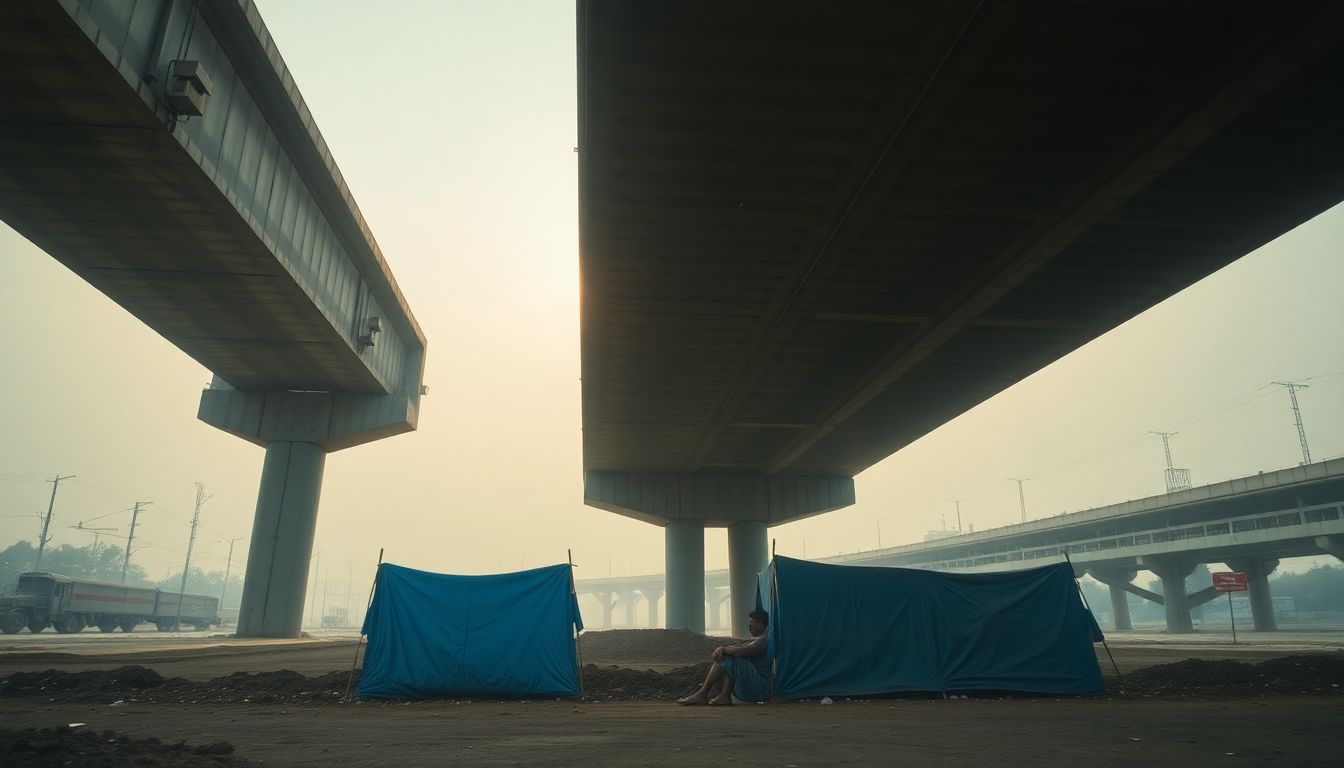
Thousands of homeless individuals in Chennai, including those living under the flyover opposite the Velachery railway station, continue to face extreme weather and unsanitary conditions following the 2022 cessation of central funding for the Shelter for Urban Homeless (SUH) scheme. According to 2024 data from the Information and Resource Centre for the Deprived Urban Communities (IRCDUC), the stoppage of central funds has left vulnerable populations exposed on the streets with limited shelter options.
In Velachery, residents like 40-year-old construction worker S Valli live in makeshift conditions under the local flyover, where passing trains and vehicles kick up dust and debris. Valli, who migrated to Chennai from Panruti, earns 600 rupees a day to cover food and her husband's medical needs, cooking on a mud stove in the open.
The funding crisis began when central support for the SUH component under the DAY-NULM scheme stopped in 2022. Greater Chennai Corporation (GCC) commissioner G S Sameeran confirmed that the civic body has been forced to utilize its own capital funds to keep its shelters functioning.
According to Vanessa Peter, founder of IRCDUC, most urban local bodies apart from the GCC have not allocated financial resources to sustain shelters. She stated that Tamil Nadu has no dedicated state-funded program to maintain these facilities, which currently operate without formal, assured financial support.
The IRCDUC 2024 data highlights that 11 percent of Chennai's homeless population sleeps under bridges and flyovers, 39 percent sleeps on open platforms, and 48 percent survives in makeshift tarpaulin or cardboard structures. Many of those affected belong to tribal communities, are guest workers, or are abandoned elderly people.
Furthermore, a lack of coordination between government departments prevents many homeless individuals from accessing essential documents such as Aadhaar cards, ration cards, and state health insurance. P Ramana Saraswathi, managing director of the Tamil Nadu Urban Habitat Development Board, noted that it is particularly difficult to accommodate people living under flyovers because they are constantly on the move and lack government identification.
Currently, Chennai has 56 shelters housing 1,231 people, but only one is dedicated to families, leaving many to remain on the streets.