TN Announces Peri-Menopausal Care Policy and Expanded Child Health Schemes
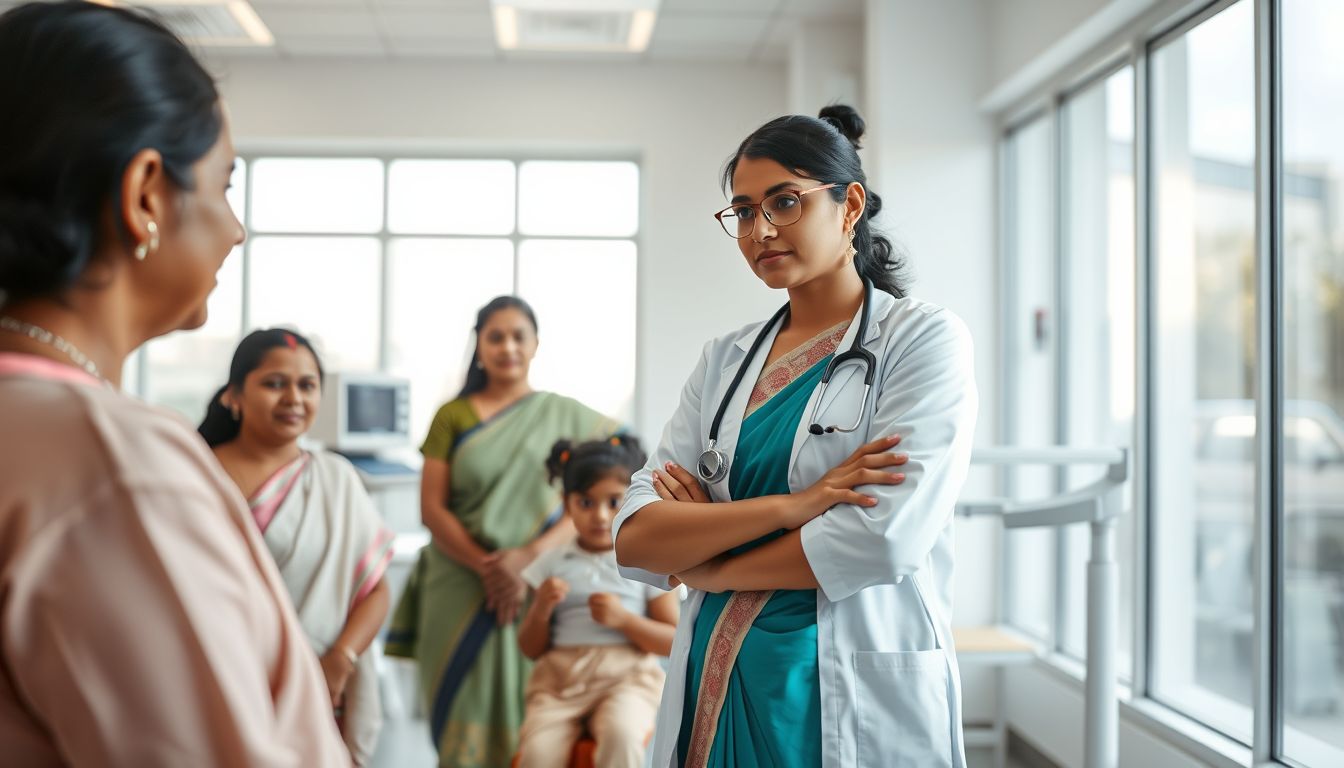
Health Minister K.G. Arunraj announced a series of major women and child healthcare initiatives on Monday, including a new Peri-Menopausal Care Policy, Bluetooth-enabled blood pressure tracking for pregnant women, and specialized care units across government medical facilities, including the Institute of Obstetrics and Gynaecology in Chennai.
Under the first-of-its-kind Peri-Menopausal Care Policy, the State will introduce screening, counselling, and treatment services to identify the physical and mental health needs of women in the peri-menopausal age group. Special camps will be held on a designated day each week across all primary health centres (PHCs) and urban PHCs. These camps will provide symptomatic assessments, basic diagnostic tests, counselling, and referrals to district headquarters hospitals and government medical college hospitals.
To improve maternal health monitoring, the department will introduce Bluetooth-enabled blood pressure monitors for pregnant women. The devices will transmit real-time data to healthcare providers to ensure timely interventions. In the initial phase, the apparatus will be distributed to nearly 10,000 pregnant women across 14 districts, including Kallakurichi, Nilgiris, Tirupattur, Dharmapuri, Dindigul, and Namakkal.
For child healthcare, the government will provide a free year-round supply of insulin to children under 18 diagnosed with type 1 diabetes at government hospitals, allocated at a cost of ₹9.94 crore. Additionally, Neo Genesis Units designed to create intrauterine and womb-like environments for extreme low birth weight infants will be established at a cost of ₹16.81 crore at the Institute of Obstetrics and Gynaecology in Chennai, as well as government medical college hospitals in Madurai, Coimbatore, Tirunelveli, Chengalpattu, and Tiruchi.
The State is also rolling out the “Irumbu Kanmani” School Anaemia Prevention programme at a cost of ₹6.37 crore. The initiative will conduct haemoglobin estimation for nearly 16.5 lakh adolescents in classes VI, IX, and XI in government and government-aided schools, followed by treatment and monitoring.
Other programmes announced include rare genetic disease screening for nearly 4.5 lakh newborns delivered in government hospitals across the State using a hub-and-spoke model. The screening will cover conditions such as congenital hypothyroidism, congenital adrenal hyperplasia, galactosemia, and biotinidase deficiency. An Autism Early Detection Programme will also be introduced, involving the training of 12,456 village health nurses and 5,000 doctors.
Further measures include newborn hearing screening facilities, transport ventilators for infants, modern equipment for human milk banks, school orthodontic treatments in five districts, and an increase in monthly financial aid for children living with HIV/AIDS.