Teynampet-Saidapet Flyover Deadline Pushed to February 2027 Over Design Snag
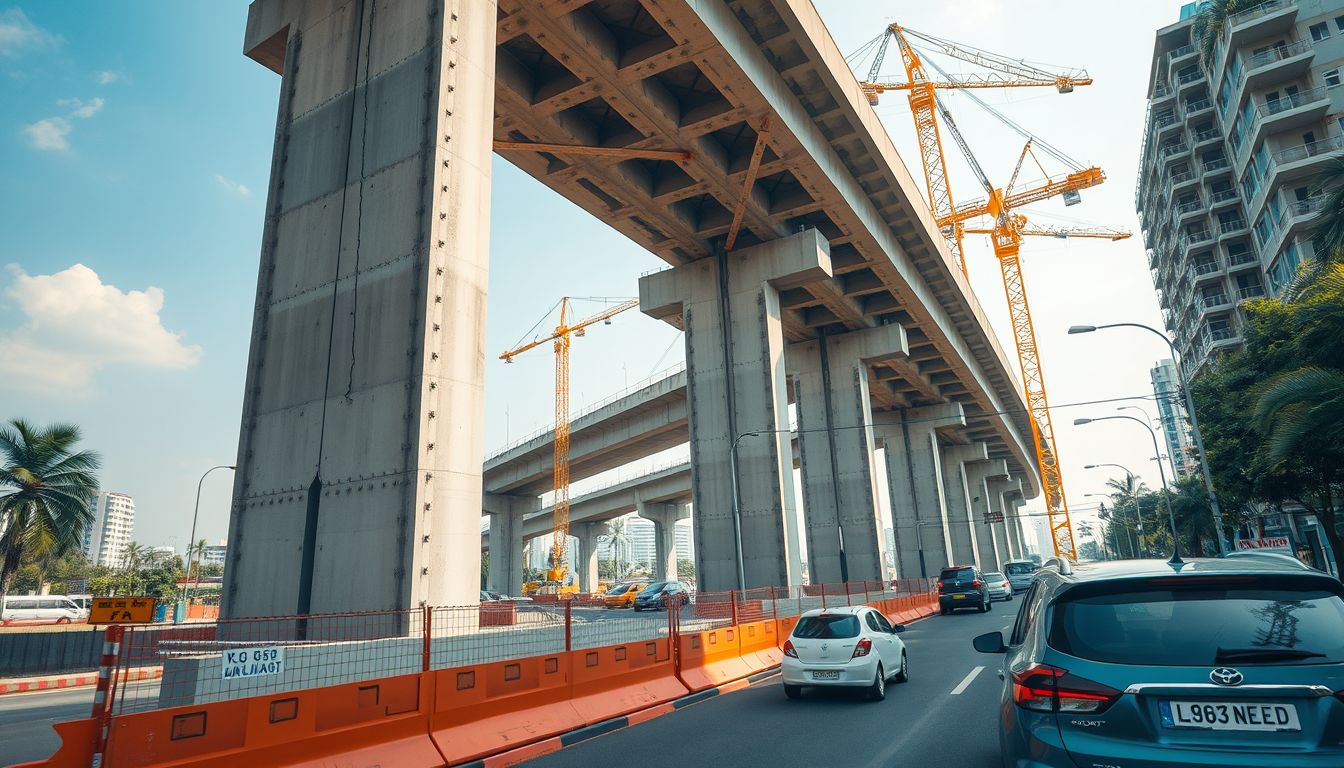
The 3.2-kilometre Teynampet-Saidapet flyover on Anna Salai will miss its September 2026 completion deadline after the state highways department encountered a major design snag midway through construction. The revised completion target for the ₹621-crore project has now been pushed to February 2027, with the delay prolonging severe traffic diversions through corridors such as Theagaraya Road in T Nagar and Cenotaph Road.
The project, which began in January 2024, requires a change of scope because the original central pillar design cannot be executed on the narrow Nandanam-Teynampet stretch. Highways department officials realised the issue only after building or placing more than 80 pillars, girders, and 50 spans along the Saidapet-Nandanam section.
According to officials, the detailed project report failed to accurately reflect the alignment of existing underground Metro foundations between Nandanam and Teynampet. Unlike other stretches, the central foundations along this corridor are not in a straight line. Placing central pillars on these misaligned foundations would have resulted in an irregular, curved flyover structure.
Road width constraints added to the problem. The carriageway narrows sharply to 28 metres on Cenotaph Road and 32 metres near Arivalayam, compared to 36 metres at DMS and 40 metres at Saidapet. Constructing central pillars on these narrower sections would have caused severe traffic disruption.
To resolve the issue, the department submitted a change-of-scope proposal to replace central pillars with portal pillars. The revision was approved last month without increasing the overall project cost. Under the modified plan, 45 portal pillars will be erected at the Teynampet and Nandanam Metro stations, with Chennai Metro Rail Limited providing foundation support on the station diaphragm walls.
Steel pillars will be set up on both sides of the pavements and linked by central pillars across the roadway to support the girders. The new arrangement allows shorter 11-metre spans between pillars instead of 30-metre spans.
So far, the highways department has erected approximately 88 pillars and placed 50 of the required 131 spans. Meanwhile, motorists continue to face difficult conditions along diversion routes, where uneven surfaces and potholes on Theagaraya Road and Cenotaph Road pose safety risks for daily commuters.