Tamil Nadu Establishes Five Renewable Energy Zones to Speed Up Green Projects
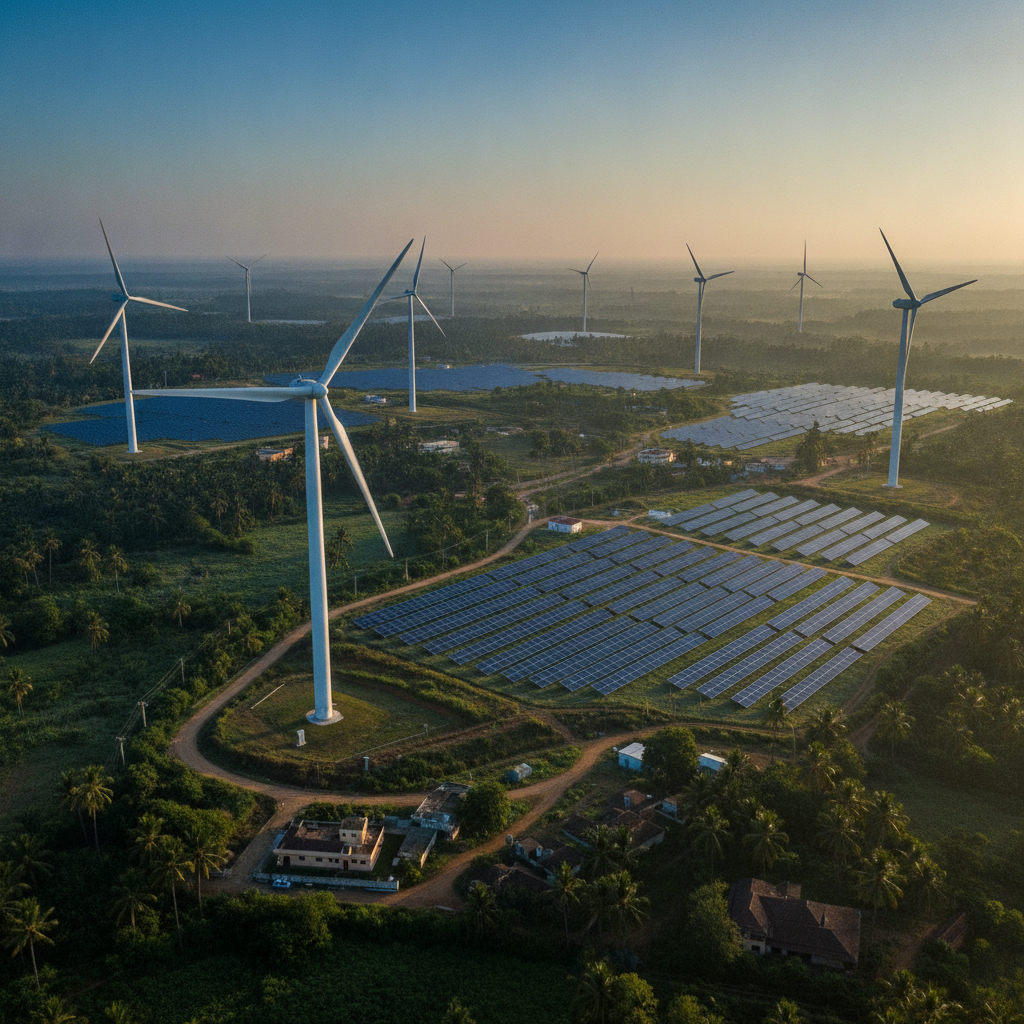
The Government of Tamil Nadu has approved the formation of five dedicated renewable energy zones, including one headquartered in Chennai, to accelerate the development and implementation of wind and solar power projects across the state. This major administrative overhaul was announced on June 20, 2026.
The restructuring was carried out by the Tamil Nadu Green Energy Corporation Limited (TNGECL). The initiative aims to provide transparent, efficient, and investor-friendly governance while strengthening the state's green energy ambitions.
As part of the reorganization, the state government dismantled the existing administrative structures of the Udumalpet and Tirunelveli Non-Conventional Energy Sources (NCES) circles.
In their place, five new renewable energy zones have been established. These zones are headquartered in Chennai, Tiruchirappalli, Tirunelveli, Coimbatore, and Madurai.
The Chennai zone will supervise renewable energy projects across the Chennai, Kancheepuram, Vellore, and Tiruvannamalai electricity distribution circles. Meanwhile, the Tiruchirappalli zone will cover the Tiruchirappalli, Villupuram, and Thanjavur circles.
The Madurai zone is set to oversee projects in the Karur, Erode, and Madurai distribution circles. The Tirunelveli and Coimbatore zones will manage projects within their respective distribution circles.
To manage these areas, Assistant Executive Engineers will head the project administration and implementation activities in each zone. Additionally, a dedicated project planning and monitoring mechanism has been set up at the Tamil Nadu Electricity Board headquarters to oversee these initiatives.
According to officials, the newly established structure will help reduce approval timelines for renewable energy projects. It is also designed to facilitate the repowering of existing wind farms, speed up technical evaluations, and improve coordination for power evacuation infrastructure.
The system is expected to provide investors and power producers with transparent single-window services.
Furthermore, the revamped framework will support several green energy programmes. These include Battery Energy Storage Systems (BESS), PM-KUSUM 2.0, PM Rooftop Solar, Model Solar Villages, the solarisation of government buildings, and proposed floating solar projects.