Seaweed Accumulates on Thoothukudi Harbour Beach Prompting IMD Wave Alert
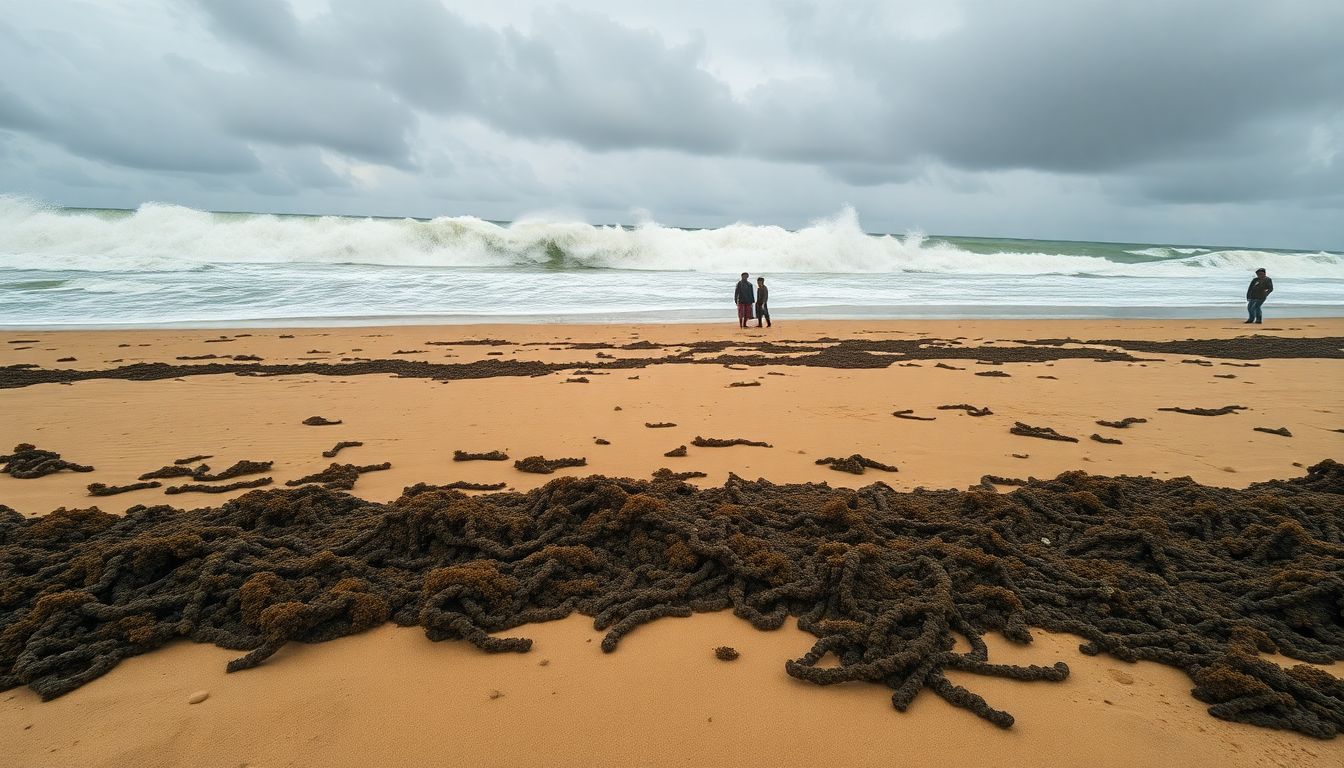
Large quantities of seaweed have washed ashore along the eastern coastal areas of Thoothukudi, including the Thoothukudi Harbour Beach, drawing the attention of local residents and tourists. The natural seasonal occurrence, which marine enthusiasts attribute to changing ocean currents and wind patterns, prompted the India Meteorological Department (IMD) to issue a swell surge warning for the coast from Periyathalai to Vembar between June 28 and June 29.
The seaweed, which naturally grows in the Gulf of Mannar marine ecosystem, has accumulated along the shoreline on multiple occasions in recent months. On June 17, a notable accumulation of red seaweed washed ashore near the Thoothukudi Harbour Beach, creating a striking natural spectacle for visitors.
Local fishermen clarified that the wash-up is a regular seasonal event. According to the fishermen, it is a common natural occurrence for seaweed to be carried to the shore by waves during periods of strong winds, and there is no cause for concern. They noted that such occurrences are typical during Full Moon and New Moon periods in certain months of the year.
However, the shifting ocean and wind patterns led the Regional Meteorological Department in Chennai to issue a Swell Surge Alert for the Thoothukudi coast. The alert forecasted swell waves in the range of 1.2 to 1.3 metres in height, repeating at periods of 15 to 17 seconds, from 5:30 p.m. on June 28 to 2:30 p.m. on June 29.
The IMD advised fishermen operating along the coast to exercise utmost vigilance. The department also cautioned the public to carry out recreational activities along the beaches with due care due to the possibility of surging waves.
This follows a similar incident in May, when large quantities of seaweed washed ashore along the same coast. At the time, some members of the local fishing communities expressed concern, attributing the accumulation to broader environmental factors such as climate change, rising sea temperatures, and shifting sea currents that alter the natural coastal environment.