Polluted 15-Acre Industrial Site in Manali Being Restored as Wetland Hub
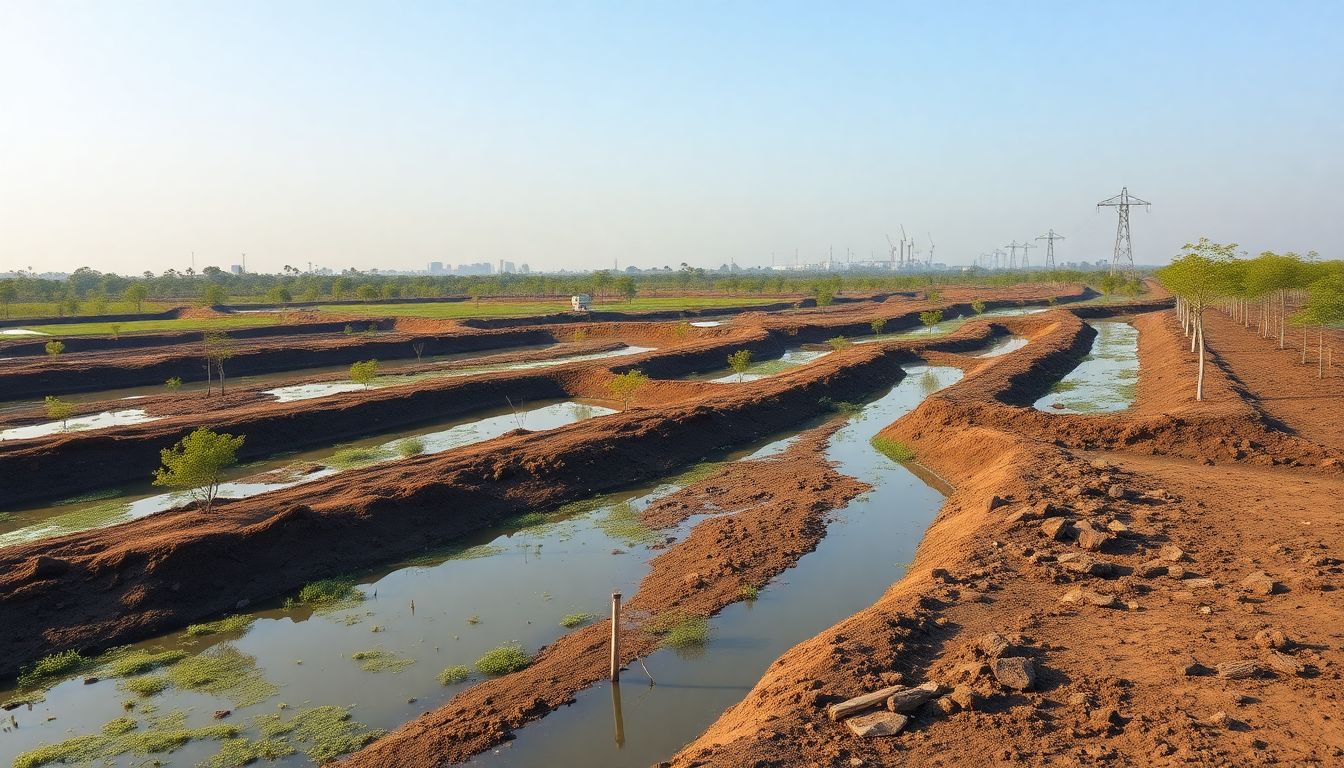
A 15-acre polluted industrial site in Manali is being transformed into a wetland ecosystem under a joint initiative by the Greater Chennai Corporation and the non-profit organisation Farmers for Forests.
The proposed Eco Action and Learning Hub will feature ponds, deep-water zones, diversion channels, and dedicated habitat areas. These additions are designed to improve ecological resilience and mitigate flood risks in the industrial belt.
As part of the restoration efforts, more than 19,000 native trees and shrubs are scheduled to be planted across the site by the end of the year. The vegetation is intended to provide a habitat for birds, pollinators, insects, and other species reliant on wetland conditions.
The facility is also slated to serve as an environmental learning centre for local communities and schoolchildren. Planned activities at the site include nature walks, birdwatching, and educational workshops focused on renewable energy, waste management, circular economy practices, and sustainable food systems.
Visitors to the centre will be able to engage in hands-on conservation work, such as tree planting, biodiversity monitoring, composting, and permaculture gardening. They will also take part in wetland restoration tasks, including the planting of native reeds, removal of invasive species, and construction of fauna habitats.
According to an official release, the hub will be powered entirely by solar energy and will integrate soil conservation measures alongside rainwater harvesting systems.
The project in Chennai represents the third Eco Action and Learning Hub established in India with support from Accenture and Farmers for Forests. Similar projects have previously been launched at Manchar in Pune and Nrityagram in Bengaluru.
Accenture stated that its support for the Manali project aims to combine direct ecological restoration with environmental education and community involvement.
Ajay Vij, senior country managing director at Accenture, noted that education and participation help translate awareness into action. He stated that by enabling people to experience sustainability firsthand, the initiative hopes to build greater understanding and inspire future generations to take on environmental responsibility.