Nirmala Sitharaman Addresses Tamil Nadu Funds and State Debt in Kancheepuram
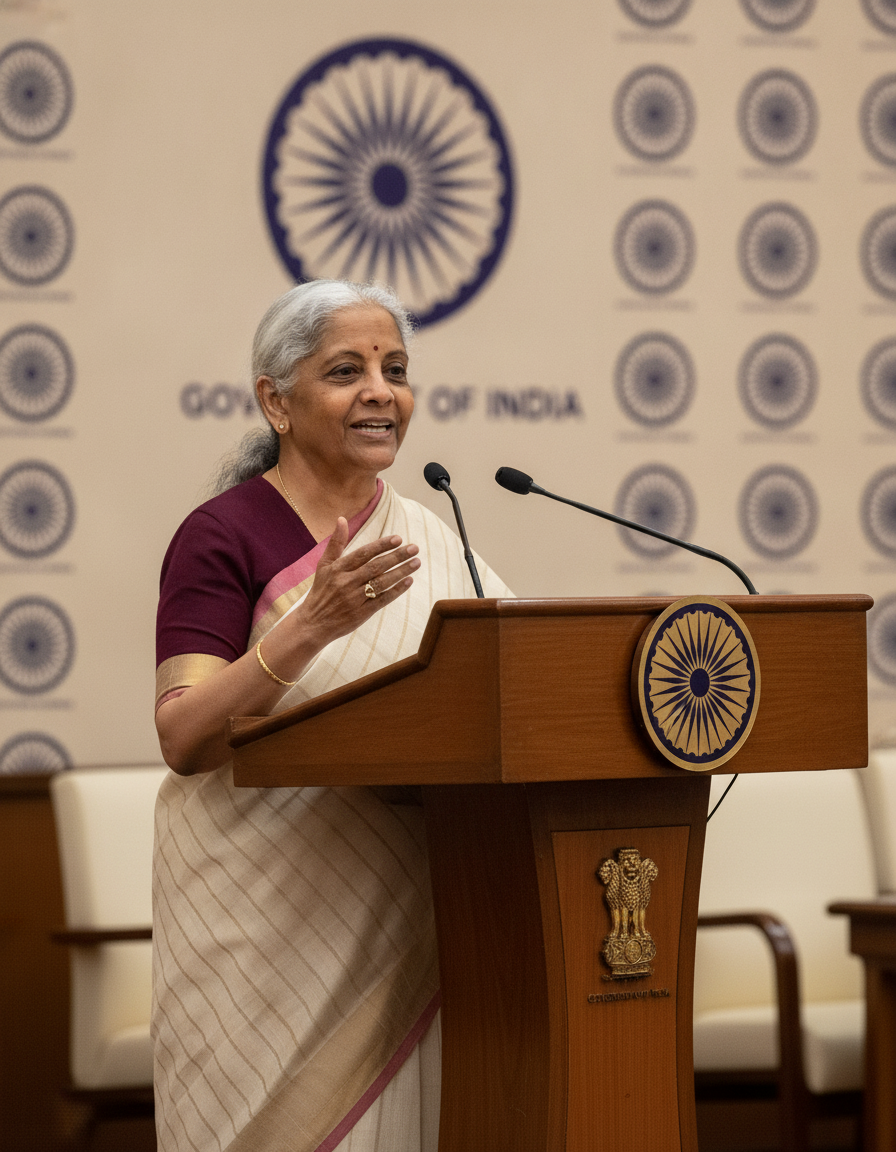
Union Finance Minister Nirmala Sitharaman on Thursday addressed reporters in Kancheepuram, asserting that Tamil Nadu has always received its due share of central funds from the Union government. Speaking on the state's financial management, she advised states on their debt utilization, urging them to focus on capital expenditure to support long-term economic growth.
Sitharaman stated that Prime Minister Narendra Modi had ensured Tamil Nadu received its due share of central funds, even during periods when the DMK was in power in the state.
During the press interaction, the Finance Minister welcomed the newly formed TVK government's stated approach of maintaining an amicable relationship with the Centre. However, she noted that it was still too early to make a complete assessment on the functioning of the TVK government.
Addressing political developments, Sitharaman responded to a question regarding TVK chief Vijay’s criticism of Chief Minister MK Stalin in the Assembly. She remarked that political exchanges are a routine part of legislative proceedings, and there was nothing unusual about such exchanges.
Sitharaman also touched upon local healthcare infrastructure in Kancheepuram. She stated that the central government would consider the state's request for a new medical college in Kancheepuram, provided that an official proposal for the project is submitted by the state government.
When asked about the proposed Parandur greenfield airport, the Union Finance Minister declined to comment on the project, explaining that she was not in a position to comment on the matter as she needed to understand the issue better.
On the topic of the debt of Tamil Nadu, Sitharaman emphasized the importance of fiscal planning. She advised that states should direct their borrowings toward creating capital assets, which generate long-term economic benefits and support growth, rather than spending them on revenue expenditure.