Madras High Court Allows Witnesses to Depose from Anywhere via Video Link
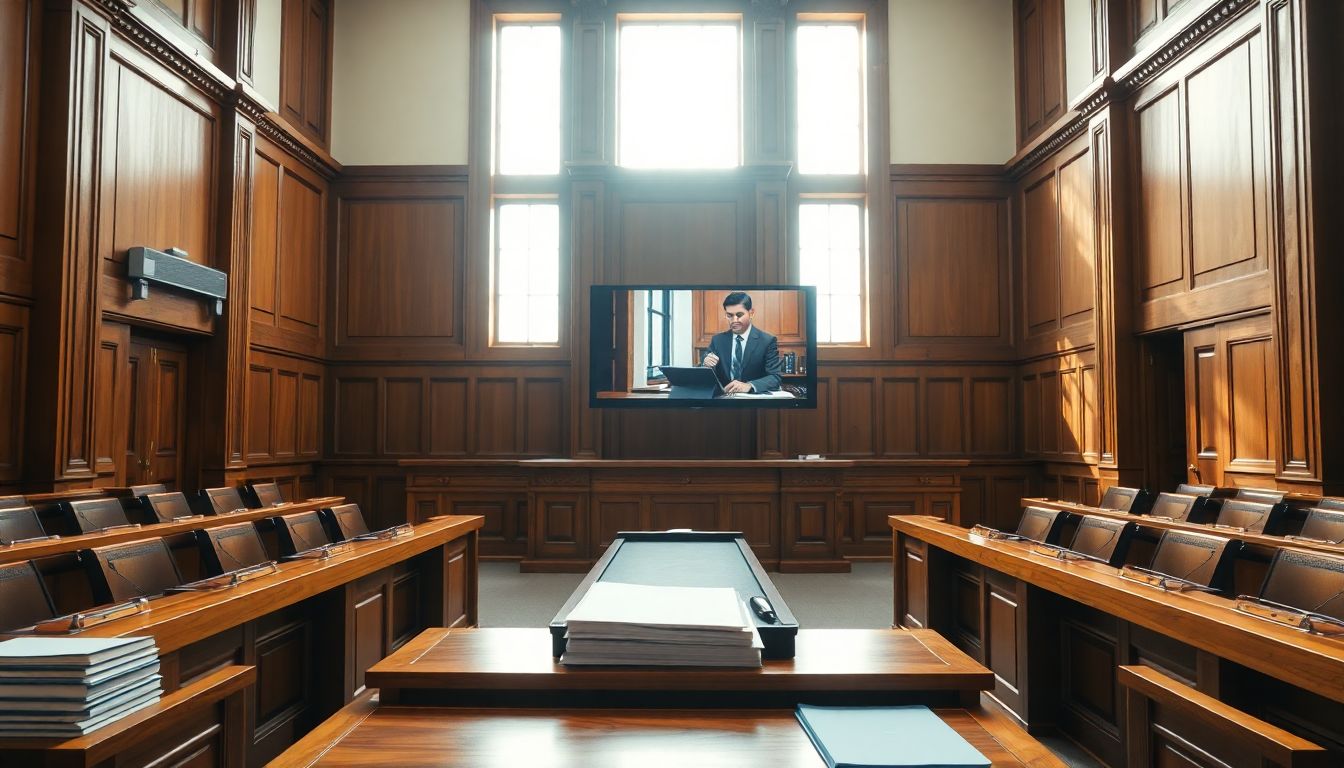
The Madras High Court has notified new regulations allowing witnesses before trial courts to depose via video conferencing from any appropriate location, including their home or workplace, subject to court permission.
The administrative order, titled the Madras High Court Video Conferencing Rules, 2026, was issued on Aug 12. While witness evidence can continue to be recorded from designated locations such as the office of a superintendent of police or government hospitals, witnesses may now present evidence from wherever they are located under exceptional circumstances such as illness, hardship, delay, or expense. The framework also covers lok adalat and jail adalat proceedings.
Public servants, police officers, and expert witnesses are also permitted to depose from appropriate locations without needing to visit designated facilities. In criminal proceedings, the advocate concerned or the party must confirm the remote location, willingness, and availability of necessary facilities. Identity must be verified through valid proof, which can be submitted electronically or displayed on camera as directed by the court.
The updated rules expand significantly on earlier norms introduced in 2020, which restricted video conferencing to justifiable circumstances such as pandemics or physical inability, and required formal affidavits and site coordinators. The 2026 rules allow video conferencing across all stages of judicial or disciplinary proceedings, including hearings, evidence recording, examination of witnesses or accused persons, and appeals. No formal application is ordinarily required for hybrid hearings or advocate appearances, though judges may still direct coordinators to resolve identity disputes.
To safeguard victims and witnesses, including child abuse survivors, the rules permit protective measures such as dummy names, face-masking, pixelation, avatar masking, and electronic voice distortion. Psychologist M Divya noted that existing facilities at superintendent of police offices, Child Welfare Committees, collectorates, and district courts often lack adequate infrastructure and privacy.
Retired police inspector R Sakthivel stated the changes could reduce trial durations, cut prisoner transport costs, and save police time currently spent assigning officers specifically for court appearances. However, human rights activist and advocate D Karvendan raised concerns that an accused person participating from prison in the presence of police might feel intimidated, emphasising the need for safeguards to protect the right to consult an advocate.
Under the rules, documents may also be displayed through screen-sharing or secure electronic channels. Exhibits handled at remote sites must be certified by a coordinator and dispatched to the trial court, preferably within three days.