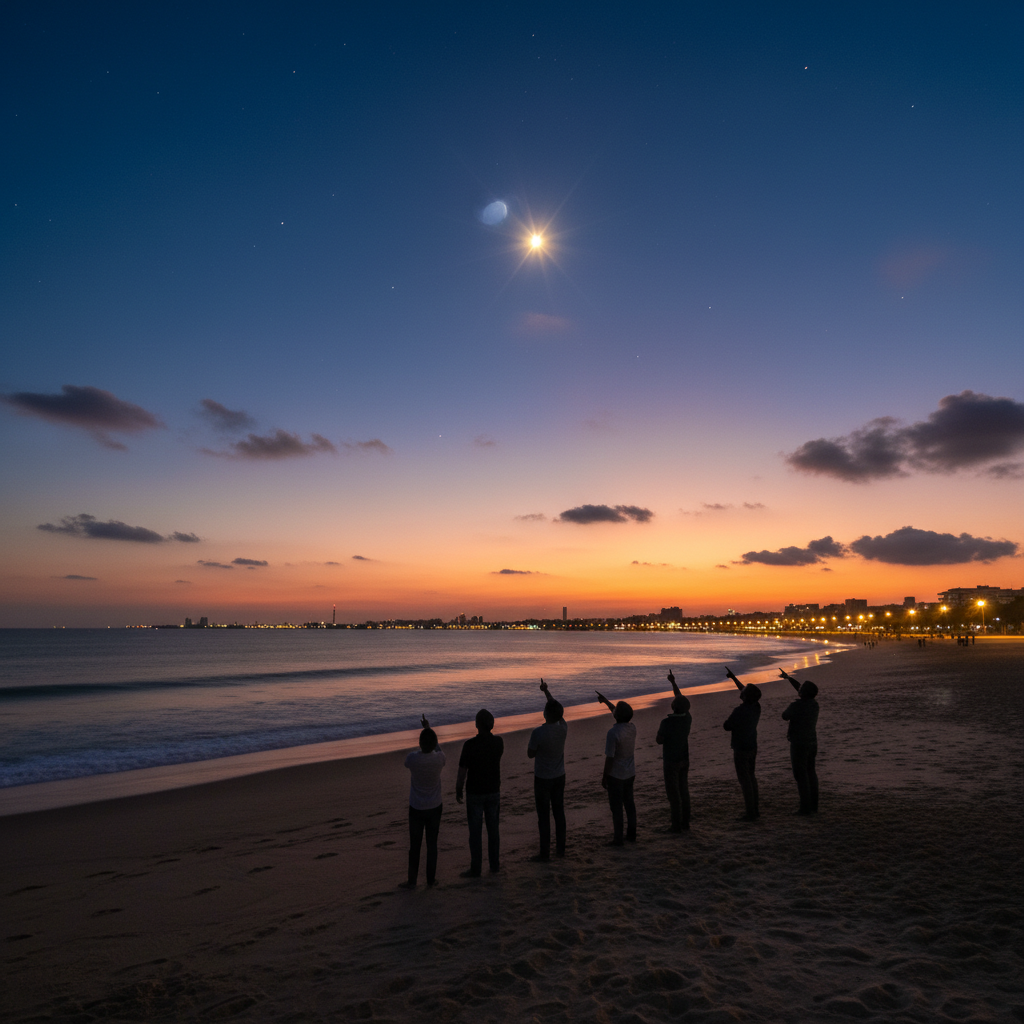
Jupiter and Venus to align in rare conjunction over Chennai sky on June 9
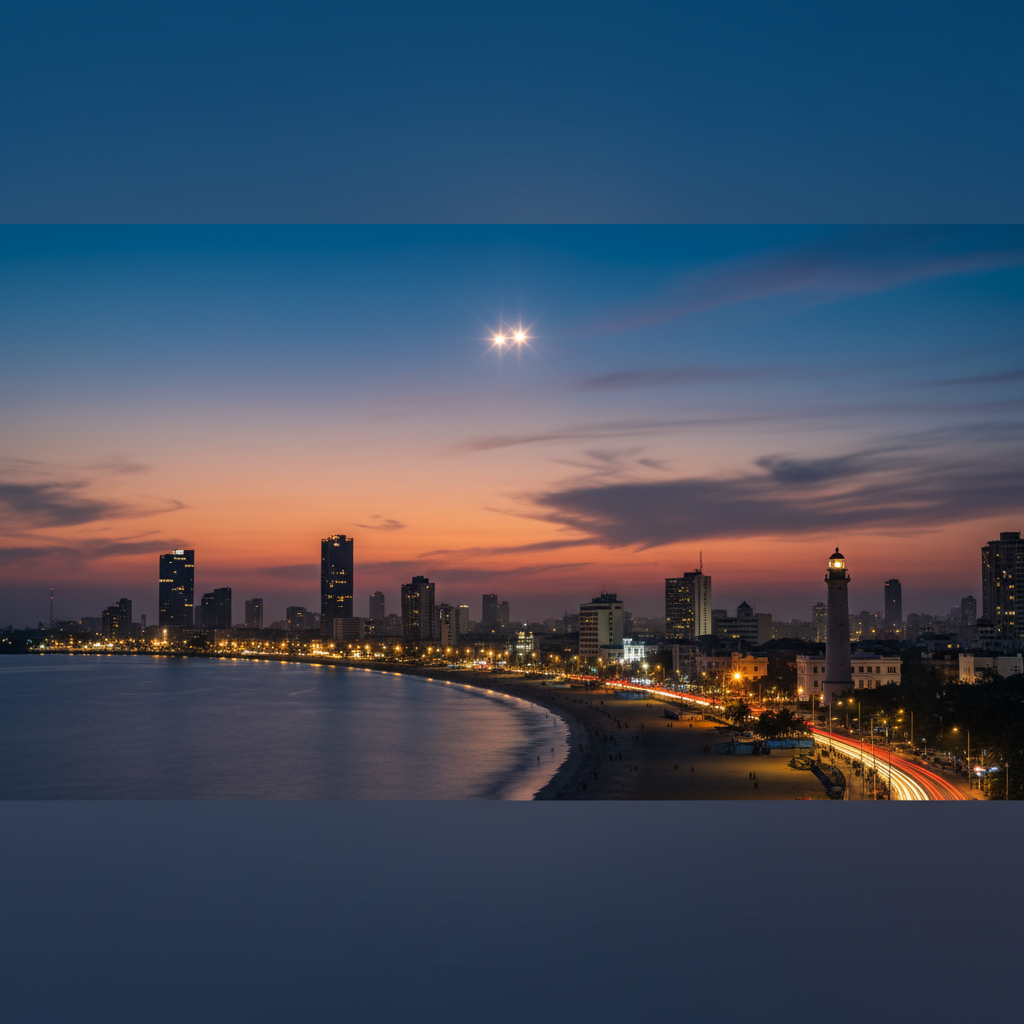
Skywatchers in Chennai can look forward to a striking celestial display on June 9, 2026, as Jupiter and Venus appear unusually close together in the evening sky. The two brightest planets will seem to be just 1.6 degrees apart, creating a rare astronomical conjunction.
The visual distance between the two planets is roughly equivalent to three full moons, or slightly more than the width of a pinkie finger held at arm’s length. Despite their apparent closeness, the event is a line-of-sight illusion. Venus will be situated between 80 and 85 million kilometres from Earth, while Jupiter lies much further away at about 900 million kilometres.
To view the event, Chennai residents should look towards the west-northwest direction of the sky approximately 45 minutes after sunset. While both planets will be visible to the naked eye, using binoculars or a telescope will offer a significantly better view.
Soundararaja Perumal, the former executive director of the Tamil Nadu Science and Technology Centre, explained the mechanics of the planetary appearance. He stated that Venus is on an eastern elongation and will continue moving east of the Sun until August, making it look increasingly bright, though its full round disc may not be visible. Jupiter, due to its immense distance from Earth, will appear slightly dimmer.
Perumal noted that conjunctions involving Venus and Jupiter do not have a fixed periodicity because planets move at different speeds. These events occur infrequently and are not always easy to see from Earth. The last such conjunction took place in August 2025.
While the next meeting between the two planets is set for August 25, 2027, it will be difficult to observe because they will be positioned too close to the Sun. Skywatchers will have to wait until November 10, 2028, for the next clear viewing opportunity.
Other planets will also be present in the same region of the sky on June 9. Mercury will be positioned in the northwestern sky, but it may be difficult to spot as it sits low in the twilight sky and reflects less sunlight than Venus. Mars and Saturn will have average visibility, while Neptune and Uranus will be extremely difficult to see without optical assistance.