IIT Madras Researchers Develop Advanced Cooling Tech for Laptops and Mobiles
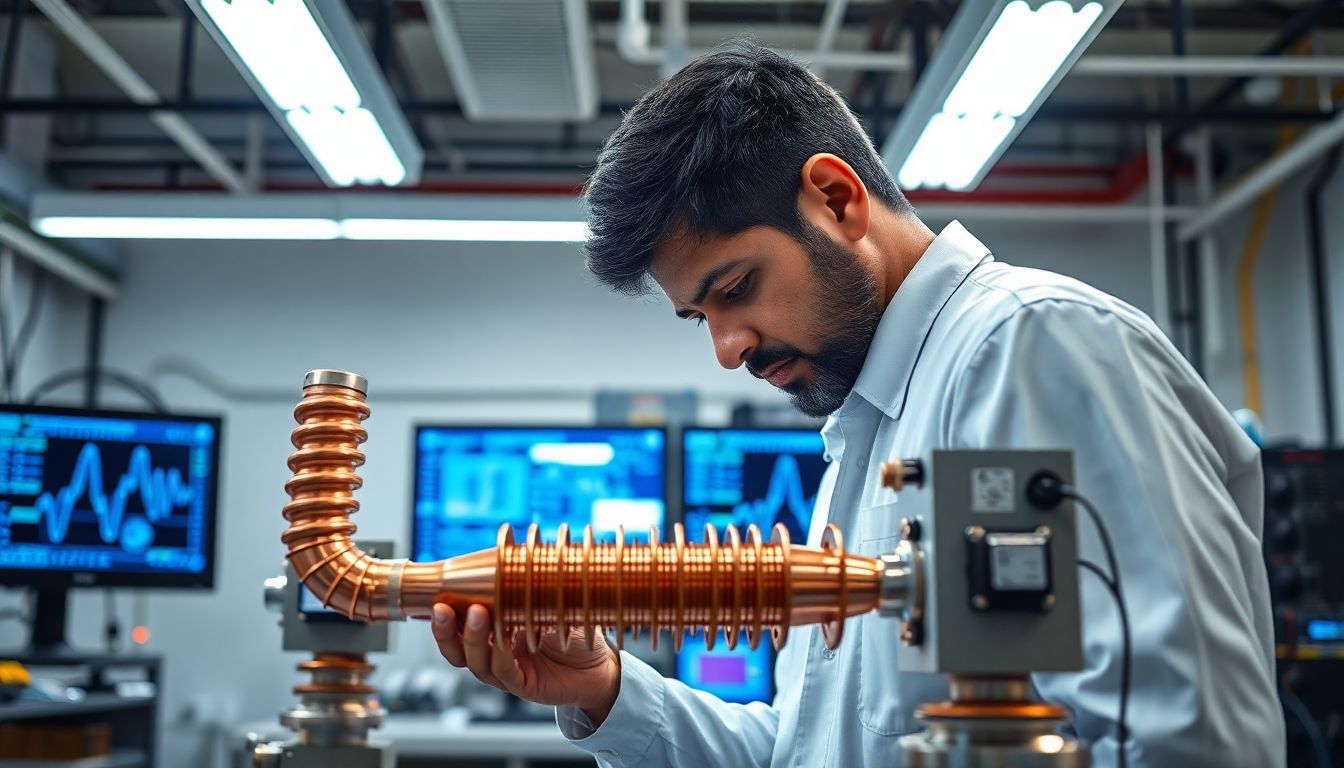
Researchers at the Department of Mechanical Engineering at IIT Madras in Chennai have developed and experimentally validated a novel cooling configuration aimed at improving thermal management in compact modern electronic devices. The newly designed system is intended for use in devices such as laptops, mobile phones, servers, data centres, and defence electronics, addressing a major challenge as electronic devices become smaller and more powerful.
The study introduces a novel design for a flat plate pulsating heat pipe (FPPHP), a passive cooling device that transfers heat using the back-and-forth movement of a working fluid through miniature channels. Unlike conventional FPPHPs where the heat-absorbing and heat-releasing sections are located on the same side, the research team developed an 'antiparallel' arrangement. This places the evaporator and condenser on opposite faces of the plate, making the structure suitable for compact electronic housings.
The researchers tested two sealing configurations during their experiments: a silicon gasket and an O-ring. When subjected to a heat input of 100 W, the O-ring configuration successfully reduced the evaporator temperature to about 69°C, compared with approximately 75°C observed in the gasket-based design. Furthermore, the O-ring design achieved an overall thermal resistance of 0.44 K/W, which is around 16 percent lower than the resistance measured in the gasket configuration.
The study also revealed that aluminium outperformed copper when utilised in this antiparallel cooling setup. The research effort was led by Prof Arvind Pattamatta and Prof Pallab Sinha Mahapatra from the Department of Mechanical Engineering at IIT Madras.
The work was carried out in collaboration with researchers from IIT Madras, Sri Sivasubramaniya Nadar College of Engineering in Chennai, and the Instruments Research & Development Establishment (IRDE) in Dehradun. The research has been published in the peer-reviewed journal Experimental Heat Transfer.