IEA Highlights India's Clean Energy Success as Model for Southeast Asia
CHENNAI — The International Energy Agency (IEA) has highlighted India's rapid expansion and progress in clean energy as a successful model that offers lessons and a blueprint for Southeast Asian nations looking to accelerate their own energy transitions.
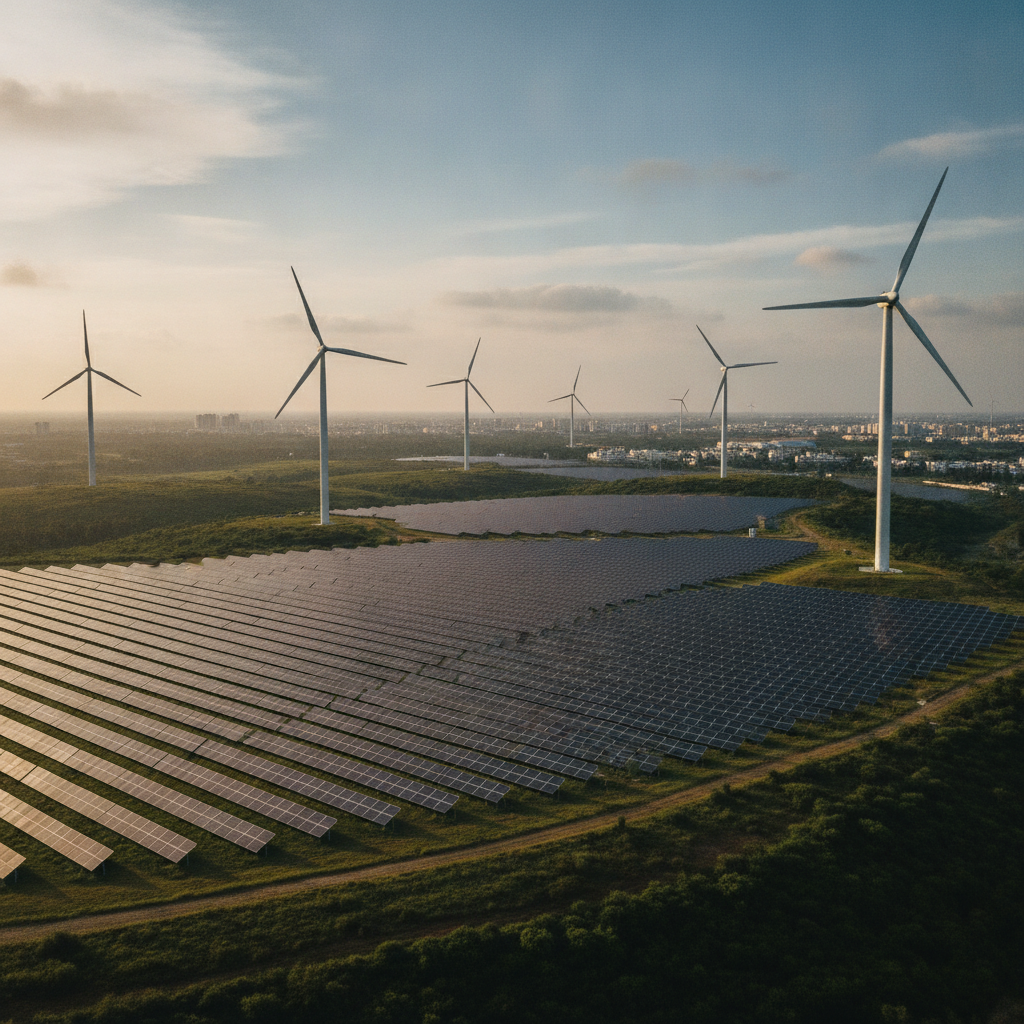
According to the latest report by the IEA, India's renewable energy transition has emerged as a significant global clean-energy success story. The country's experience demonstrates how a large developing economy can rapidly scale up its renewable power capacity while adapting its electricity grid to handle new balancing challenges.
In 2025, India achieved its target of installing 50% non-fossil-fuel-based power generation capacity, reaching the milestone five years ahead of its original schedule. This rapid expansion was largely driven by solar and wind energy, which together accounted for nearly three-fourths of all new power capacity added over the previous five years.
The IEA pointed to three key pillars behind India's success: ambitious long-term targets, a comprehensive policy framework, and strong institutional support. The government's commitment to building 500 GW of non-fossil power capacity by 2030 has provided a clear signal to investors, developers, and manufacturers, creating a predictable growth trajectory for the sector.
Supporting policies have helped translate these targets into actual demand. Renewable Purchase Obligations, which feature clearly defined future trajectories, required power distribution companies to steadily increase their renewable procurement.
At the same time, Green Open Access Rules enabled commercial and industrial consumers to purchase renewable electricity directly from developers, broadening the market beyond traditional utility buyers. To strengthen local supply chains, Production-Linked Incentive (PLI) schemes encouraged the domestic manufacturing of solar modules and wind equipment.
Public institutions also played a critical role in reducing investment risks and accelerating deployment by providing concessional financing, refinancing, and credit-enhancement support. The IEA noted that while underlying conditions, challenges, and governance landscapes differ across regions, India's evolution in managing grid-balancing needs serves as a valuable case study for Southeast Asian countries.