High Last-Mile Feeder Costs Outweigh Bus and Rail Fares for T Nagar Commuters
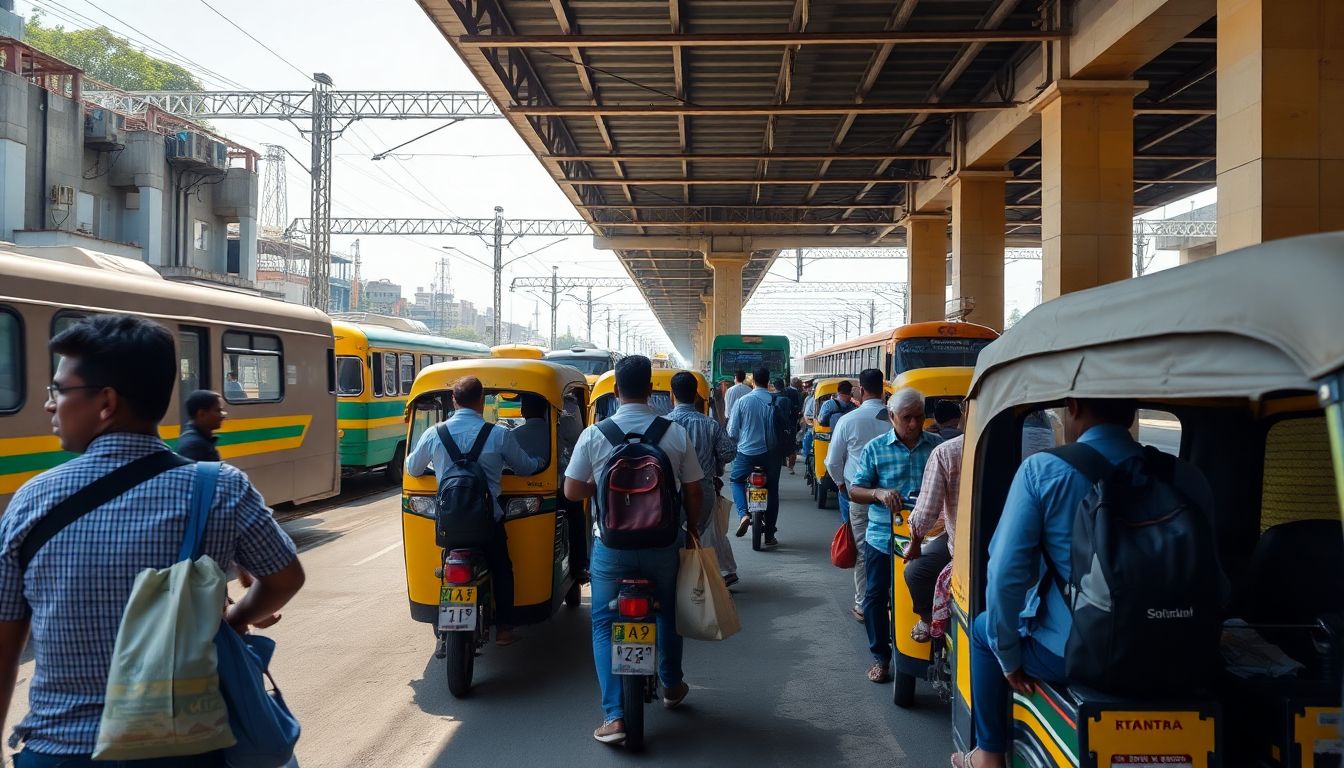
Commuters travelling to and from T Nagar and other core areas in Chennai face last-mile travel expenses that significantly surpass the cost of their main rail or bus journeys, highlighting major gaps in the city's public feeder network.
An analysis of five major routes—Anna Nagar–T Nagar, T Nagar–Velachery, Thiruvanmiyur–Thoraipakkam, Porur–Vadapalani, and Velachery–Taramani—revealed that for residents making 10km to 20km round trips, cheap public transit tickets do not translate into overall savings. Feeder trips of up to 5km using autorickshaws exceed Metropolitan Transport Corporation (MTC) fares by 250% to 900%.
For commuters residing within 5km of a railway station or bus stop, last-mile feeder costs at just one end of the journey range from ₹7,920 per year for share autos to ₹52,800 per year for private autos. For those who require an auto or bike taxi at both the boarding and destination stations, these annual expenses double. When the feeder distance expands to a 5km to 10km radius, the yearly expenditure rises to between ₹15,840 and ₹95,040.
The cost disparity is particularly pronounced along routes such as Chennai Beach–Guindy and Chennai Beach–Velachery. On these corridors, an annual suburban EMU train commute costs ₹5,280. However, using an autorickshaw for a feeder trip at one end costs ₹31,680 annually—six times the total train fare. Using a share auto as a feeder on the same route costs ₹7,920 per year, amounting to 150% of the train fare.
Commuters using the Chennai Metro face similar economic challenges. While metro services offer faster transit, an auto feeder trip costing ₹31,680 per year is nearly double the annual metro fare of ₹16,896 calculated for the analysed routes.
The high reliance on private and informal transport persists amid a shortage of public feeder options. Across Chennai, against an estimated 2.7 crore daily trips, the MTC operates only 146 small buses, which include 22 metro feeder services. In contrast, the city's transport ecosystem includes approximately 1.3 lakh autorickshaws and an estimated 20,000 bike taxis.