GCC and Tambaram Launch Drive to Remove Dangerous Illegal Hoardings
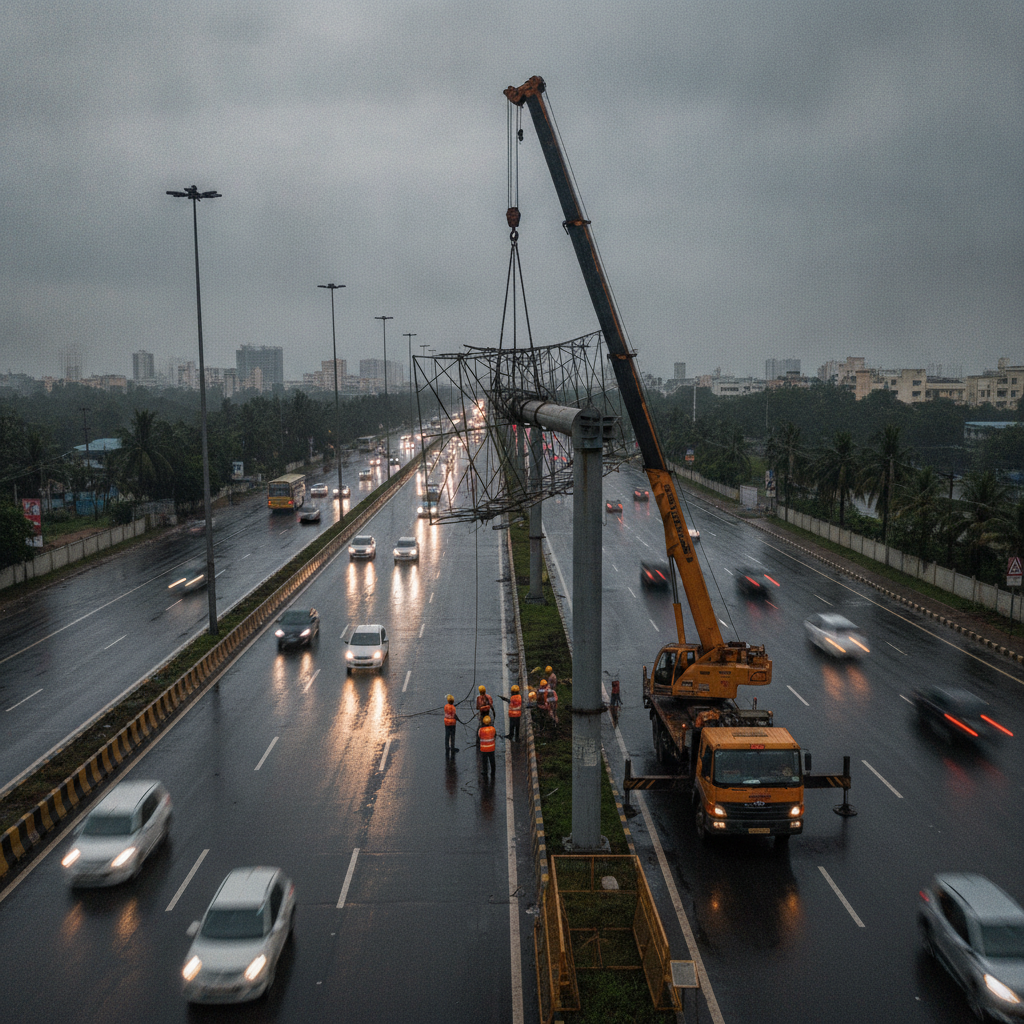
Following incidents of hazardous banner falls during recent rains, including one that blocked a driver's windshield on the 200 Feet Pallavaram-Thoraipakkam Radial road in Tambaram, civic bodies have launched a massive drive to remove unauthorized and illegal hoardings. Greater Chennai Corporation (GCC) Commissioner G S Sameeran announced that the round-the-clock removal drive would commence on Saturday, June 20, 2026, to ensure public safety and regulatory compliance.
The action comes after several banners and hoardings collapsed during rains on Thursday, endangering residents and road users. In Maduravoyal, a steel advertisement structure fell onto an electricity distribution structure near a bus stop, forcing passengers to run for their lives and damaging the compound walls of nearby houses. In the Tambaram corporation area, multiple political and private banners fell onto roads, obstructing commuters and covering the windshield of a moving vehicle on the busy radial road.
In response, the GCC has levied a ₹1 lakh penalty on the owner of the collapsed Maduravoyal structure. Commissioner Sameeran stated that the costs of removing unauthorized hoardings will be recovered directly from the responsible advertisement companies or property owners.
The civic body has also established fixed hoarding-cutting charges. The rates are set at ₹22 per square foot for structures up to the first floor, ₹26 up to the second floor, ₹29 up to the third floor, and ₹33 for structures above the third floor. Transportation of the removed metal structures using 5 MT HMV tippers is fixed at ₹5,250 per eight-hour shift, while crane charges are set at ₹750 per hour. All specified rates exclude GST.
According to the corporation, the removed structures must be weighed and shifted to designated regional storage locations. The details, including weight and storage location, will be submitted to the mechanical engineering department for disposal through public auction.
Zonal officers have been instructed to monitor the removal machinery, geo-tag operations with latitude and longitude data, and document the process with before-and-after photographs. Division and zonal engineers must issue work completion certificates before payments can be processed from zonal funds.