Forest Department establishes pollinator garden in Acharappakkam village
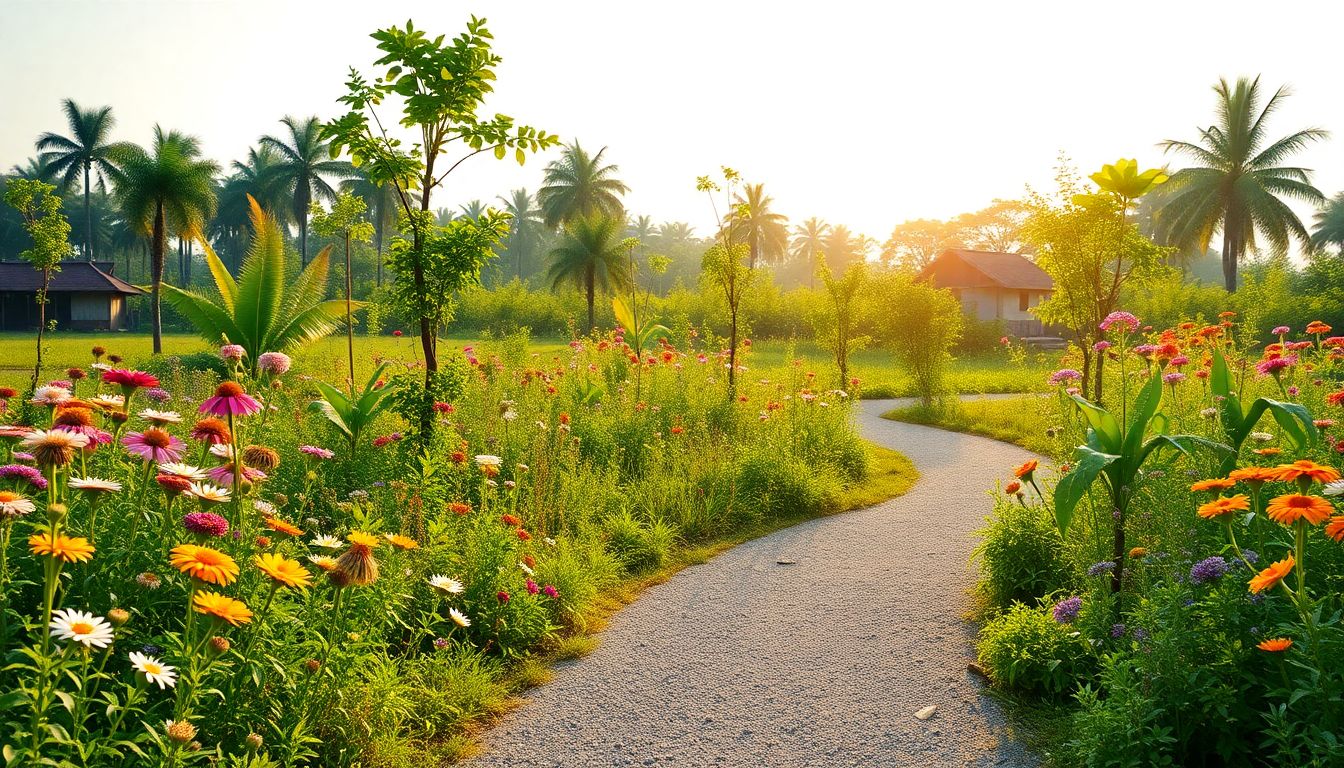
The Tamil Nadu Forest Department has established a dedicated pollinator garden featuring 147 flowering species in Acharappakkam village, located in the Chengalpet district. Led by I Anwardeen, the Principal Chief Conservator of Forests (Research and Education), the ecological project is part of the state's Maragadha Pooncholai village green initiative to support bees, butterflies, and other pollinating fauna throughout the year.
Each Maragadha Pooncholai site is developed as a structured village green. In addition to the pollinator gardens, the sites feature native tree plantations of 625 trees, biodiversity nurseries, rainwater harvesting structures, and protective fencing.
The pollinator gardens are designed using flowering native and ornamental plants selected to provide continuous nectar, pollen, and larval host plants across all seasons. The gardens collectively support six plant categories, including 60 nectar plants, 30 larval host plants, 26 bee forage plants, 19 species of night pollinator plants, and 14 pollinator support plants.
Abundant plant species introduced at the site include Alari, Sembaruthi, Vetchi, Nithyakalyani, Nandhiyavattai, Panneer Roja, Samanthi, Gundu Malli, Kagidha Poo, and Pavazhamalli. These were selected specifically for their flowering duration, nectar output, and compatibility with local pollinators.
The garden in Acharappakkam has already begun attracting documented butterfly species, including the Common Mormon, Plain Tiger, Blue Tiger, Common Rose, and Tawny Coster. Six bee species have also been recorded at the site: the Indian honey bee, Rock bee, Dwarf honey bee, Stingless bee, Carpenter bee, and Leaf-cutter bee. Other visitors include hoverflies, flower beetles, wasps, moths, and sunbirds.
Several tree species planted at the site, such as Pavazhamalli, Ilavam, Iluppai, Naval, and Murungai, indirectly support nectar-feeding fruit bats and insectivorous bats. These trees provide canopy, roosting habitats, and seasonal fruit resources, while the increased insect abundance further benefits bat foraging.
According to forest officials, the gardens serve measurable ecological functions beyond their ornamental value. The initiative is designed to enhance the pollination of wild plants and adjacent agricultural crops, conserve butterfly populations, improve seed and fruit production, and strengthen overall ecosystem resilience.
Officials have positioned the initiative as a scalable model for climate-resilient, biodiversity-friendly rural landscapes that can be replicated across similar rural green infrastructure projects statewide.