DMK and TVK Clash in Tamil Nadu Assembly Over Delimitation Stance
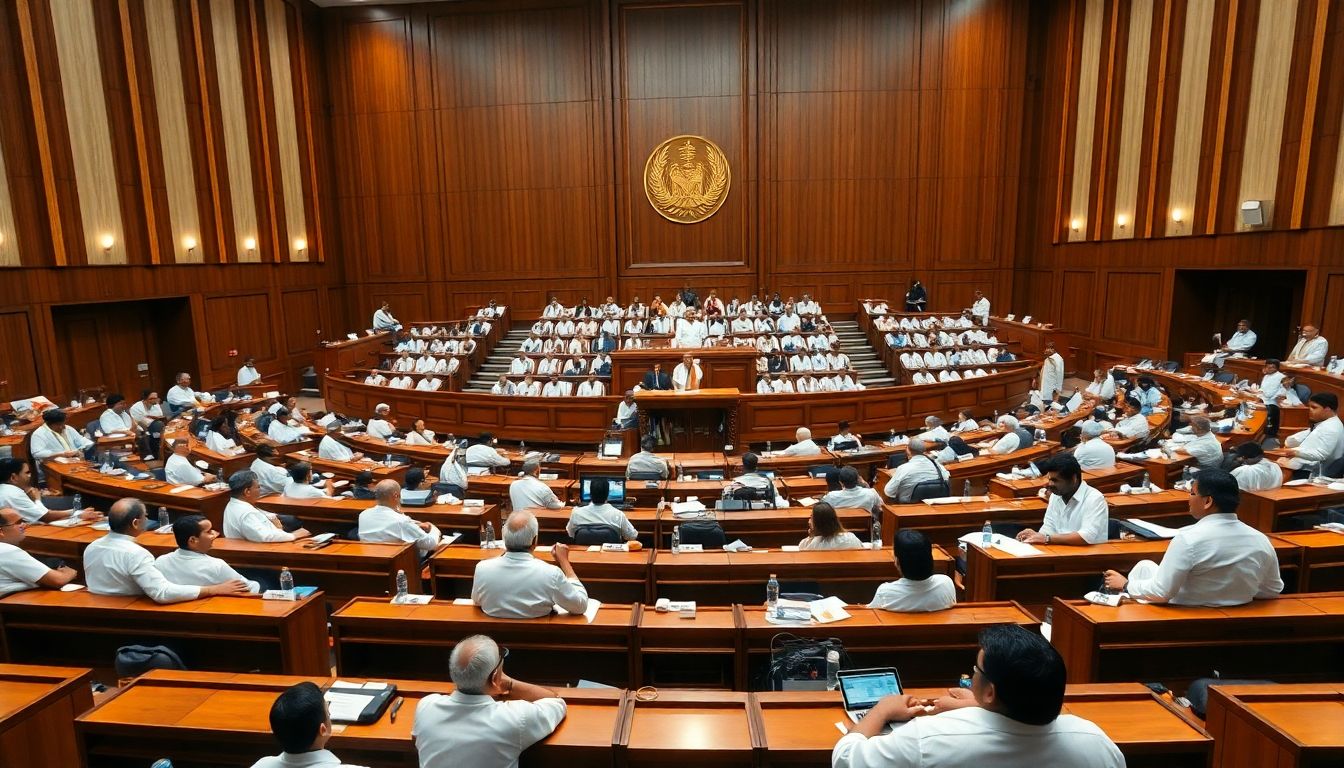
A political face-off erupted in the Tamil Nadu Assembly in Chennai on Friday as the opposition DMK and the ruling TVK clashed over the state's official position on the upcoming Lok Sabha delimitation exercise.
Leader of Opposition Udhayanidhi Stalin questioned the consistency of Chief Minister C Joseph Vijay, pointing out that while the state assembly had passed a resolution to freeze the total number of Lok Sabha seats at 543, the Chief Minister omitted the specific term during the Southern Zonal Council meeting.
Udhayanidhi noted that the TVK government passed a resolution in the House to freeze the total seats at 543, but Chief Minister Vijay did not use the word freeze at the zonal gathering, which he suggested diluted the state's demand. He reiterated that the DMK remains committed to a total freeze on constituency redrawing or ensuring that Tamil Nadu's current 7.18 per cent representation is preserved.
Defending the administration, TVK MLA CTR Nirmal Kumar stated that the agenda of the Southern Zonal meeting was specifically designed to address broader issues concerning all southern states.
Minister Adhav Arjuna intervened to state that the government's position remains unwavering, affirming there has been no change in their stand regarding delimitation. Arjuna countered the Leader of Opposition by claiming the DMK had historically shifted its stance and had not previously insisted on the 543-seat cap.
The legislative debate followed Chief Minister Vijay's address at the 31st meeting of the Southern Zonal Council on Thursday. During that meeting, Vijay urged the Union Government to provide a clear legislative assurance that no state would lose parliamentary representation under the proposed Delimitation Bill, 2026.
Vijay had warned that population-based delimitation could disproportionately diminish the collective voice of southern states in Parliament, arguing that states should not face reduced representation for successfully implementing national population stabilisation and family planning policies over the past five decades.