Dancer Patruni Chidananda Sastry Explores Drag and Natya Shastra in New Book
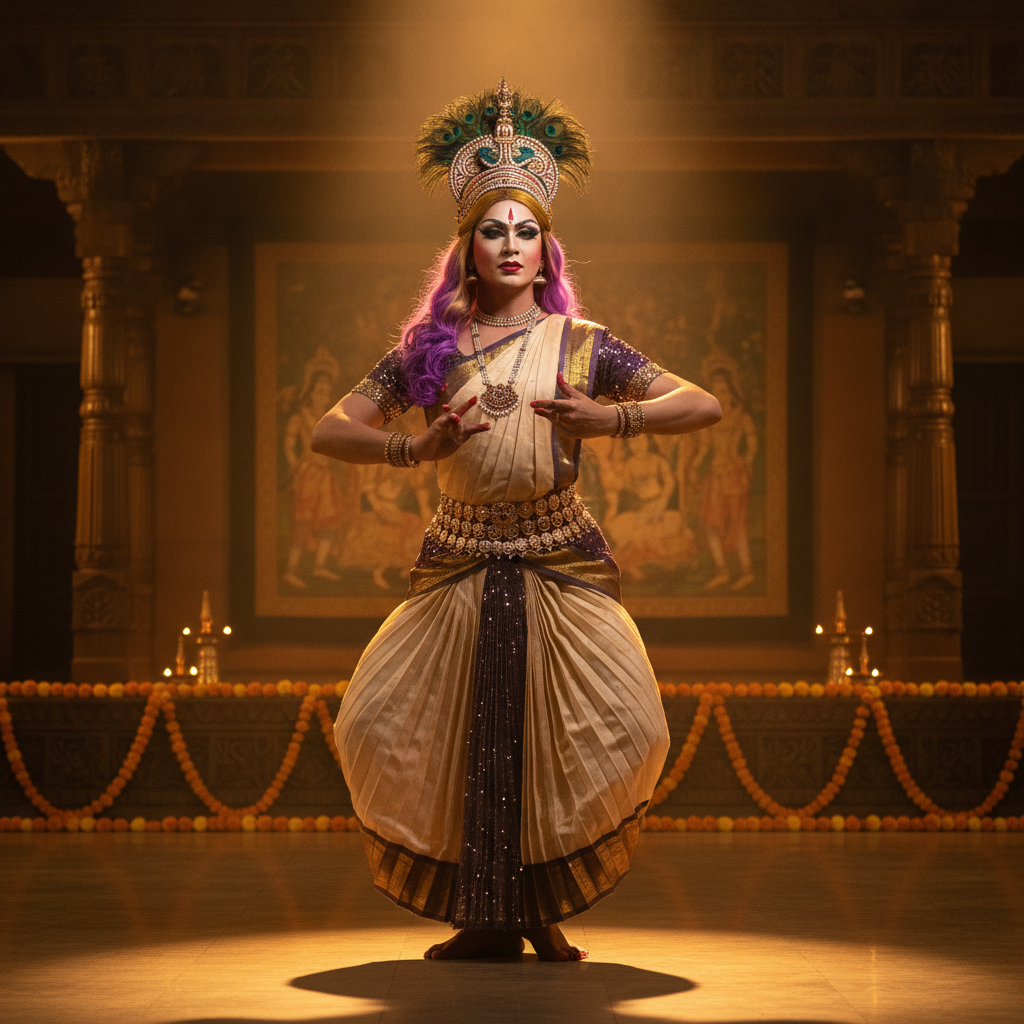
Classical dancer and drag artist Patruni Chidananda Sastry has introduced their new book, 'Drag Sastra, A Queer Lens on Natya Shastra for the Drag Artist', in Chennai. Published by Ukiyoto Publishing, the book explores the historical and theoretical connections between modern drag performance and the ancient Indian performing arts treatise, the Natya Shastra.
Sastry, who is also a queer cultural practitioner, aims to provide a performance manual for drag artists while challenging heteronormative structures. The book, priced at Rs 280, combines queer theory with traditional Indian performing arts to reconstruct classical dance practices through a queer lens.
The author's inspiration for the book came from their personal journey transitioning from classical dance to drag. While studying for a Bharatanatyam diploma with Kalai Kaviri, which is affiliated with Tamil University, Sastry encountered the concept of Roopanurupam. This Kuchipudi performance tradition allows men to dress as women and portray complex feminine expressions, known as abhinaya.
Sastry observed a stark contrast in how society respected classical dance while viewing drag with dismissive attitudes or as a Western import. This led them to investigate how the Natya Shastra and related Indian performance traditions could offer frameworks to understand contemporary drag.
In the book, Sastry argues that both classical performance and drag were born out of societal necessity. They draw parallels between the movement, expressions, and gestures of drag and the historical performance traditions of India. Sastry notes that the book's title incorporates "Sas," which is their own drag name.
The research highlights various regional gender-fluid traditions across India, such as Theyyam in Kerala, Sadhoba in Gujarat, Launda Naach, and Bhama Kalapam in Andhra Pradesh, alongside historical examples like Bal Gandharva in Marathi theatre and Jatra traditions in Bengal. Sastry argues that queerness and performative gender expression have long been part of Indian stagecraft, and the current resistance to drag stems from the language used to understand it rather than the practice itself.